


Rooftop planting scheme

Rooftop planting scheme
As UK cities become denser and the climate continues to change, rooftops are becoming increasingly valuable spaces for planting. Urban roof environments are often exposed to strong winds, reflected heat and often have limited water availability; conditions that are likely to become more intense in the futurein areas such as London. For this reason, rooftop planting schemes need to be carefully designed using plants that are resilient, adaptable and able to thrive in restricted soil volumes, while still delivering long-term visual and environmental benefits.
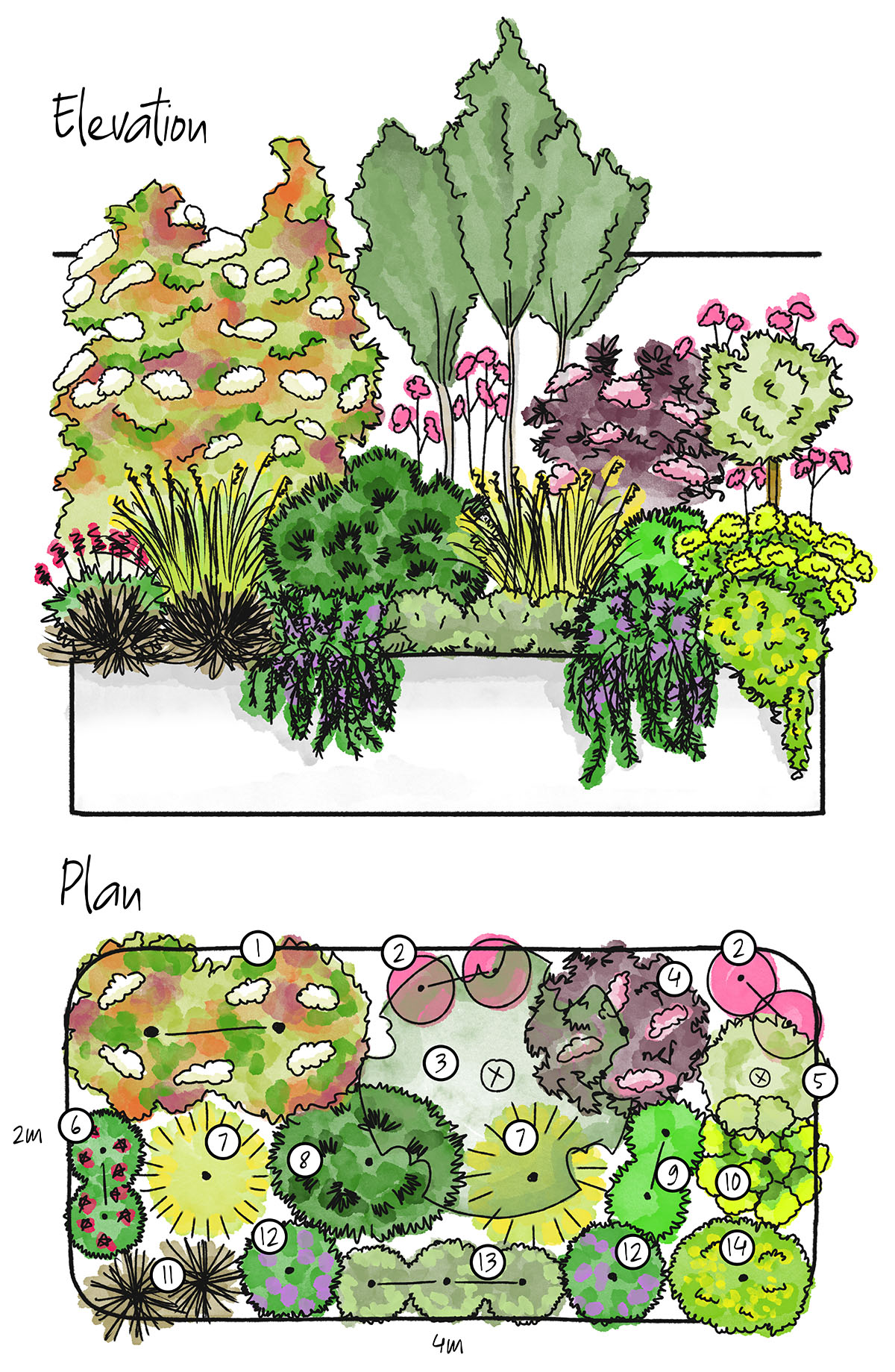
This rooftop planting scheme has been developed with future climate conditions in mind, combining structural plants, grasses, perennials and groundcover that are well-suited to hot, dry summers and milder winters. Many of the selected species have natural adaptations that help them cope with drought and heat stress, such as small or narrow leaves, waxy or aromatic foliage, and efficient root systems that make the most of available moisture. Plants such as Olea europaea, Pinus mugo, Rosmarinus officinalis ‘Prostratus’ and Thymus × citriodorus ‘Silver Queen’ are particularly well adapted to these conditions and perform reliably in containers once established.
The scheme uses a layered planting approach, which helps plants support each other and creates a balanced, natural appearance. Taller structural species at the back, including Hydrangea anomala URBAFLORA® ‘Terra Firma’, Betula pendula in multi-stem form, Sambucus nigra ‘Black Lace’ and Olea europaea, provide shelter, light canopy cover and vertical interest without creating excessive shade or wind resistance. The use of a multi-stem Betula is especially suitable for rooftop settings, as it offers a lighter structure and greater stability in exposed locations. In the middle of the scheme, plants such as Verbena bonariensis, Astrantia major and Sesleria autumnalis introduce movement, seasonal flowering and softness, helping to link the taller planting with the lower layer. At the front, evergreen and aromatic plants including Sarcococca confusa, Euphorbia amygdaloides var. robbiae, Carex oshimensis ‘Evergold’, Rosmarinus and Thymus help to protect the soil surface, reduce moisture loss and provide year-round interest close to the edge of the planter.
In addition to being resilient, this planting scheme also supports urban biodiversity. Many of the flowering species provide nectar and pollen for insects over a long season, while shrubs and small trees offer shelter and structure within an otherwise hard urban environment. In dense city centres, rooftop planting can act as a network of green spaces that help wildlife move through the landscape while also improving air quality and reducing surface temperatures.
Well-designed rooftop planting schemes like this one play an important role in preparing urban areas for the future. By using climate-adapted plants and a considered, layered structure, they can remain attractive and functional with relatively low maintenance, while contributing to cooler, greener and more liveable cities.
1. Hydrangea anomala URBAFLORA® ‘Terra Firma’, 2. Verbena bonariensis, 3. Betula pendula (multi-stem form) 4. Sambucus nigra ‘Black Lace’, 5. Olea europaea, 6. Astrantia major, 7. Sesleria autumnalis, 8. Pinus mugo, 9. Sarcococca confusa, 10. Euphorbia amygdaloides var. robbiae 11. Carex oshimensis ‘Evergold’, 12. Rosmarinus officinalis ‘Prostratus’ 13. Thymus × citriodorus ‘Silver Queen’ 14. Lonicera URBAFLORA® ‘Precipice’

①
Hydrangea anomala URBAFLORA® ‘Terra Firma’
A vigorous climbing shrub with strong self-clinging growth, suited to covering walls and structures. Its broad green foliage provides dense cover and cooling shade, while summer flowers attract pollinators and extend seasonal interest with minimal maintenance once established.

②
Verbena bonariensis
A sun-loving perennial that has tall branching stems with flattened heads of lilac-purple flowers. Verbena bonariensis works well in a prairie-style planting scheme alongside tall grasses and can be positioned in any part of a sunny border.

③
Betula pendula (multi-stem form)
A fast-growing deciduous tree native to northern Europe and parts of Asia, well adapted to cold climates. Its pale bark reflects winter sunlight, reducing temperature fluctuations within the trunk, while its light canopy structure allows it to withstand snow loading and winter winds.

④
Sambucus nigra ‘Black Lace’
A deciduous shrub native to Europe, well adapted to a wide range of climates and soil conditions. Its finely cut, dark purple foliage absorbs light and tolerates exposed sites, while pale pink flowers in early summer attract pollinators and are followed by dark berries that support birdlife.

⑤
Olea europaea
An evergreen tree native to the Mediterranean, well adapted to hot, dry climates and poor soils. Its narrow, grey-green leaves reduce water loss and reflect strong sunlight, while its deep-rooting habit helps it cope with drought and long periods of summer heat.
⑥
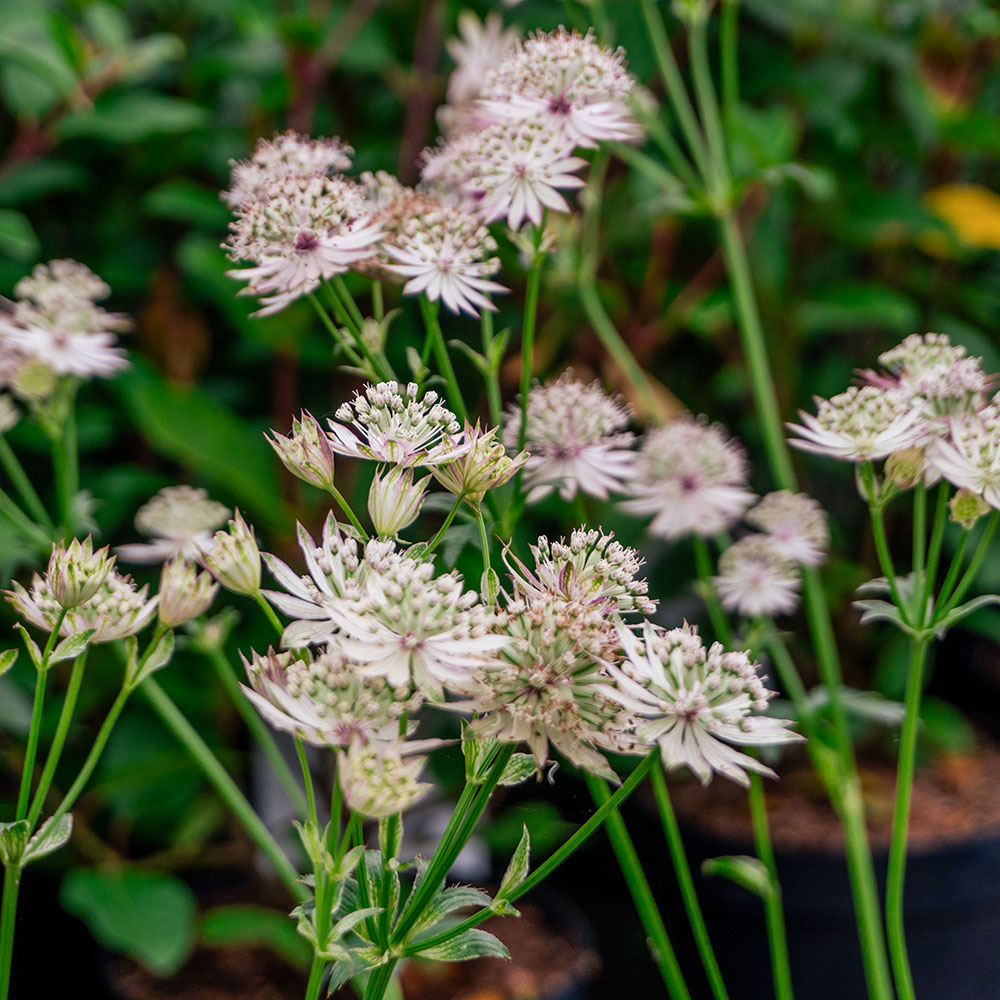
Astrantia major
A clump-forming perennial with finely divided green leaves and star-shaped, pincushion-like flowers in shades of pink, white, or red. Blooming from late spring to summer, it adds delicate texture and attracts pollinators.

⑦
Sesleria autumnalis
A semi-evergreen grass native to southern and central Europe, well adapted to dry soils and exposed sites. Its fine green foliage forms a dense mound that suppresses weeds, while soft flower heads in late summer extend seasonal interest and tolerate heat and light drought.

⑧
Pinus mugo
An evergreen conifer native to the mountains of central and southern Europe, well adapted to cold winters, wind, and poor soils. Its compact form and tough needles reduce moisture loss, while its strong branching structure helps it withstand snow loading and exposed conditions.

⑨
Sarcococca confusa
An evergreen shrub native to western China, well adapted to shade, dry soil, and sheltered urban sites. Its glossy leaves cope well with low light, while small winter flowers release a strong scent and provide an early nectar source when little else is in bloom.
⑩
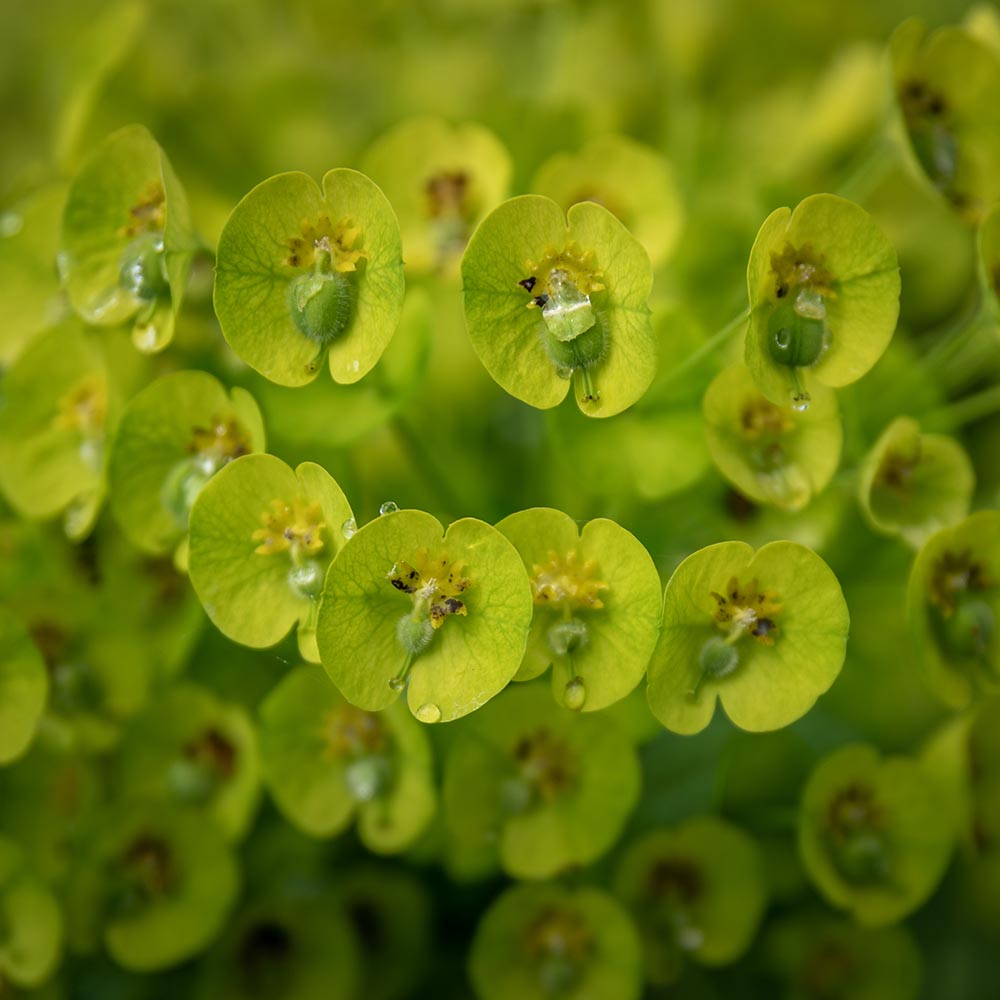
Euphorbia amygdaloides var. robbiae
A spreading evergreen perennial suited to dry shade and difficult sites. Its leathery green leaves form dense groundcover that helps suppress weeds, while lime-green spring flowers provide early interest and support pollinators. Tough and reliable, it performs well with minimal maintenance.

⑪
Carex oshimensis ‘Evergold’
An evergreen ornamental grass with arching, variegated green and gold leaves that bring year-round structure. It forms a dense, low mound that helps cover soil and suppress weeds, performing well in shade or partial sun with minimal maintenance.

⑫
Rosmarinus officinalis ‘Prostratus’
A low, spreading evergreen rosemary with aromatic foliage and a naturally trailing habit. Its narrow leaves reduce water loss, making it well suited to dry, sunny sites, while its blue flowers support pollinators and extend seasonal interest with minimal maintenance.

⑬
Thymus × citriodorus ‘Silver Queen’
A low, evergreen thyme with silvery variegated foliage and a fresh lemon scent. Its small leaves cope well with sun and dry soils, forming a neat mat that suppresses weeds, while summer flowers support pollinators with very little maintenance.

⑭
Lonicera URBAFLORA® ‘Precipice’
A vigorous, shrubby climber with oval green foliage and highly scented, tubular white flowers flushed purple in summer. Glossy red berries follow in autumn, extending seasonal interest and providing a valuable food source for birds in wildlife-friendly planting schemes.