


Trees for spring blossom
Ensuring early season blooms in your planting schemes
In any well-designed landscape, trees provide a framework that anchors planting and defines space throughout the year. They outline streets, soften buildings, frame views and create structure that holds a green landscape together. When those trees carry early spring blossom, they provide a wider period of colour, as well as the first clear signal of seasonal change, lifting a site visually while supporting the wildlife that depend on early flowers.
After months of limited nectar and pollen, early spring can be a challenging period for pollinators. Queen bees and other insects begin to emerge as temperatures rise, yet food sources are still limited. Trees that provide blossom at this time are highly valued by pollinating insects searching for early pollen. In commercial landscapes, where planting often prioritises durability and low maintenance, blossom trees can deliver both strong visual impact and ecological benefit.
Amenity planting and commercial landscaping in the modern day must now often demonstrate a benefit to biodiversity, as well as visual appeal. Urban environments in particular have reduced habitat diversity, and isolated planting does little to support wildlife long term. Integrating spring blossom trees into schemes helps rebuild seasonal continuity, connecting ornamental value with environmental benefit, ensuring that early colour is appealing to both wildlife and communities.
Choosing the right species requires careful thought. Flowering time, flower form, mature size and overall growth habit must all suit the setting. When these factors are properly considered, spring blossom trees become dependable features that return each year with consistent performance, supporting pollinators while improving the character of a space. Site conditions are rarely perfect. Soil types can vary, drainage may be inconsistent, and nearby buildings often create extended periods of shade. Selecting trees that can cope with these conditions is key to achieving planting that remains healthy, balanced and sustainable over the long term.
Adaptability is one of the most important qualities to prioritise. Trees that establish reliably across a range of soil types, from moderately fertile loams to heavier ground, are better suited to urban and semi-urban landscapes. Strong root development in the early years helps secure long-term stability and reduces the need for corrective work later. Trees that tolerate partial shade are especially useful where planting sits close to buildings or within enclosed courtyards. Although full sun can encourage heavier flowering, many well-selected species will still deliver consistent blossom with several hours of daylight rather than continuous exposure.
Maintenance requirements should also be assessed from the outset. Planting with a higher level of required maintenance can become difficult to manage, particularly across larger schemes. Trees that need little pruning beyond early formative shaping, and that show natural resilience to common pests and diseases, help keep long-term management straightforward. Reduced upkeep requirement helps lower ongoing costs and limits the need for chemical treatments, allowing trees to establish and mature with fewer inputs.
Flower shape is equally important. Open, accessible blooms provide greater value to pollinators than heavily doubled forms that restrict access to nectar and pollen. Selecting blossom trees with this in mind strengthens their ecological contribution while maintaining visual quality. Early spring flowering can then play a meaningful role within the wider habitat network, rather than acting as a short-lived decorative feature.
Scale and growth habit must also suit the space. Trees that mature to an appropriate height reduce future pressure on buildings, paving and surrounding infrastructure. A balanced canopy and moderate vigour ensure that blossom remains visible and proportionate within the wider planting scheme, supporting both design clarity and long-term performance.
Spring blossom trees we recommend:

Amelanchier lamarckii

Malus ‘Evereste’
Amelanchier lamarckii
Amelanchier lamarckii is a highly versatile small tree that produces delicate white, star-shaped flowers in early to mid-spring. It performs well in a range of soil types and tolerates partial shade, making it particularly useful near buildings or in enclosed courtyards. Its moderate size reduces future management concerns, while its layered branching creates a light canopy that does not overpower surrounding planting. Beyond blossom, it offers seasonal continuity with fresh foliage and strong autumn colour.
Malus ‘Evereste’
Malus ‘Evereste’ is a reliable ornamental crab apple valued for its abundant spring blossom and strong disease resistance. The flowers are open and accessible to pollinators, supporting early insect activity in urban and commercial settings. It adapts well to different soil conditions and can tolerate light shade, provided it receives reasonable daylight. Later in the year, its decorative fruits extend interest and contribute additional wildlife value, strengthening its role in sustainable planting schemes.
Prunus avium
Prunus avium, the native wild cherry, delivers clouds of white blossom in spring and integrates naturally into both rural and urban landscapes. It performs best in well-drained soils but shows good adaptability once established. Its flowering supports pollinators, while later fruit provides food for birds. As a native species, it also contributes to broader ecological networks, making it a strong choice where biodiversity is a priority.
Crataegus monogyna
Crataegus monogyna, or hawthorn, is one of the most resilient blossom trees available. It tolerates varied soil types, wind exposure and partial shade, which makes it suitable for boundary planting, roadside schemes and open sites. Its spring flowers support a wide range of pollinating insects, and its berries later in the season benefit birds. Its naturally balanced form requires minimal pruning, aligning well with low-maintenance management strategies.

Prunus avium

Crataegus monogyna
Cornus mas
Cornus mas flowers earlier than many other spring blossom trees, often in late winter or very early spring. Its clusters of small yellow flowers provide an important nectar source at a time when resources are limited. It remains moderate in size and adapts well to different soils, provided drainage is adequate. Its early bloom helps extend the flowering season in larger schemes, ensuring continuity for both visual interest and wildlife support.
Prunus serrulata
More commonly known as Japanese cherry blossom, Prunus serrulata is a widely planted ornamental cherry valued for its abundant spring blossom and balanced, architectural canopy. Flowering typically occurs in mid-spring, with pale to rich pink blooms carried along the branches before or as the foliage emerges. It performs well in fertile, well-drained soils and adapts to urban conditions provided drainage is adequate. Its moderate mature size makes it suitable for streetscapes, courtyards and public open spaces where seasonal impact is required without excessive canopy spread. While some cultivated forms produce fuller flowers, selecting single or semi-double varieties can enhance accessibility for pollinators, supporting both visual appeal and ecological function within commercial planting schemes.
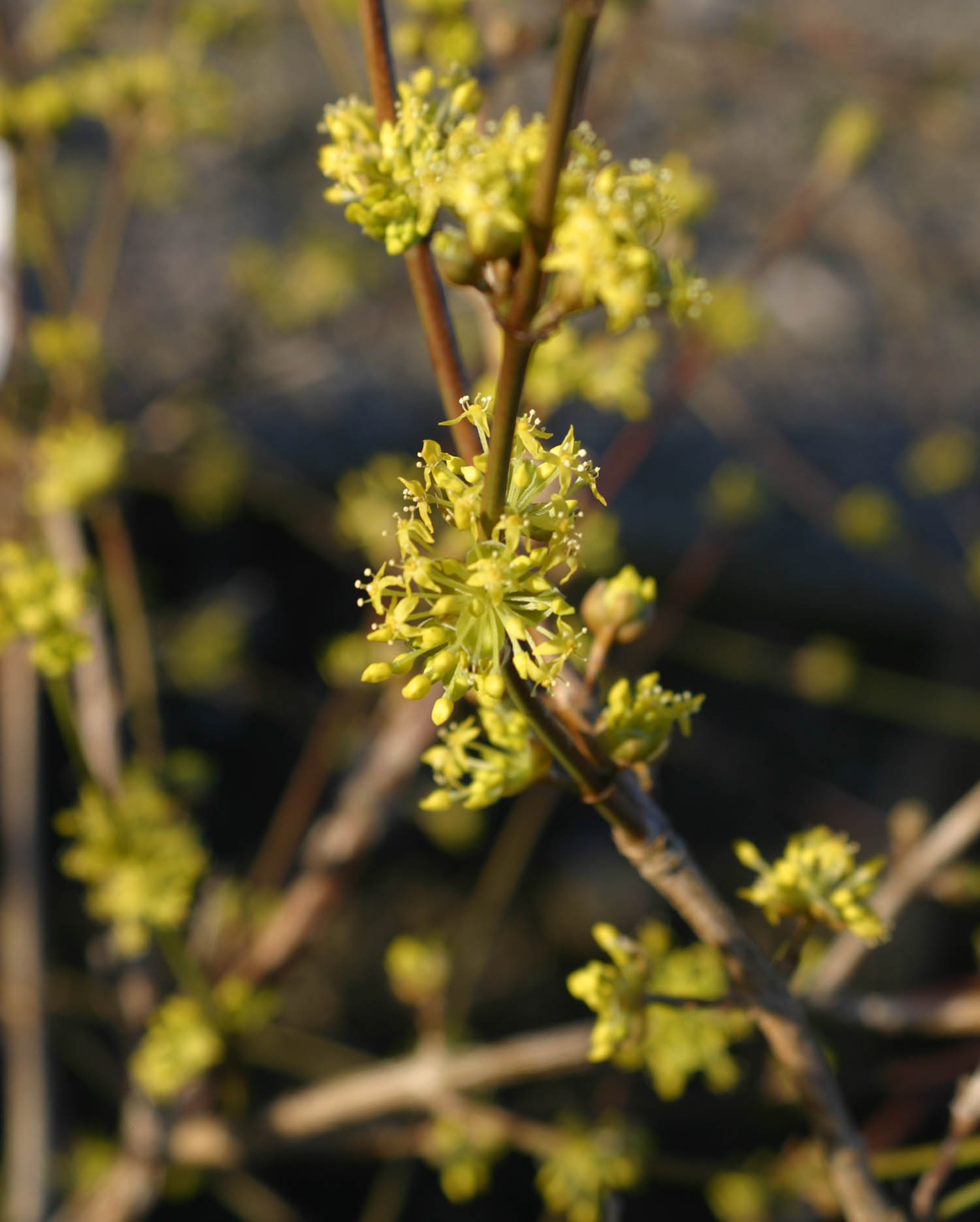
Cornus mas
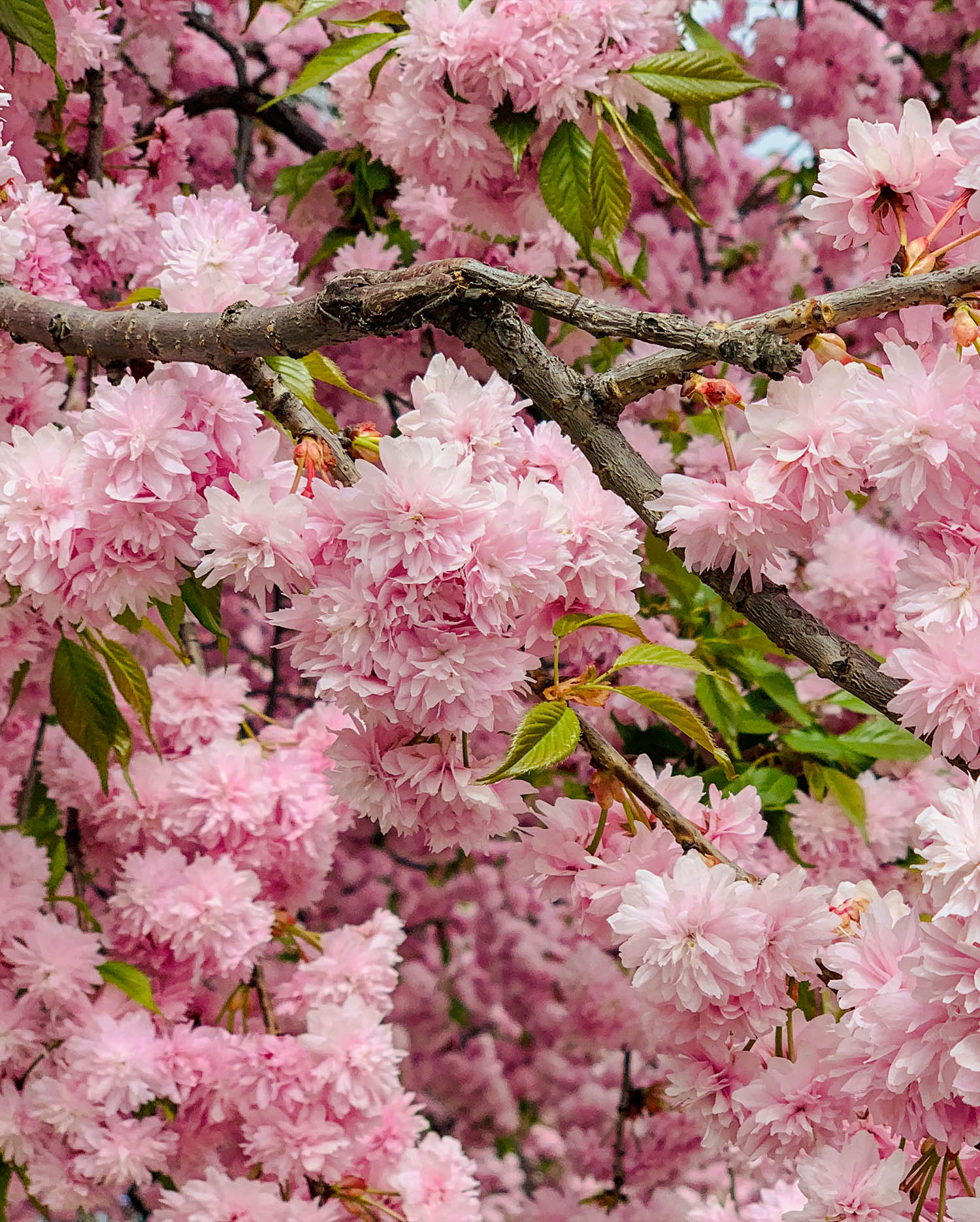
Prunus serrulata
Spring blossom trees offer a visual lift early in the year, but their value extends far beyond a few weeks of colour. When carefully selected and responsibly maintained, they become long-term contributors to sustainable landscapes. They provide early resources for pollinators, seasonal structure for planting schemes and continuity that strengthens biodiversity year after year.
If you would like more information on selecting the most suitable spring blossom trees for your project, get in touch with the G Team today.