


Evergreen plants with striking foliage
Create foliage-rich planting schemes with year-round appeal
Planting schemes can face real challenges in winter. As deciduous trees and shrubs drop their leaves, many landscapes lose structure, colour and movement. Borders that feel full and textured in summer can appear flat and empty by late autumn. This seasonal change also affects wildlife. With fewer leafy plants to offer cover, food and shelter, many animals face greater exposure to harsh weather and predators. For commercial schemes, winter are often when a landscape needs design support the most, yet it is often the point where visual interest is at its lowest.
Evergreen plants provide a dependable source of interest. Their retained foliage supports structure, character and colour throughout the year. In winter, they hold the landscape together, keeping areas vibrant, screened and functional. They also provide reliable shelter for insects, birds and small mammals at a time when resources are limited. In urban planting schemes, evergreen shrubs can soften hard surfaces, frame entrances, and add contrast to buildings even in the coldest months.
Evergreen leaves tend to be thicker and tougher than deciduous leaves. Many have a waxy coating that protects them from water loss and cold winds. This helps the plant conserve energy, allowing it to hold onto its leaves year round rather than shed them in autumn. Deciduous trees, by contrast, lose their leaves to save energy through winter. They let go of their foliage to avoid water loss and damage, growing new leaves once temperatures rise again. The difference in leaf structure means evergreens stay active for longer periods, playing an important role in stabilising landscapes and providing continuity between seasons.
Variegated species add even more visual interest. Their patterned leaves introduce brightness and texture, especially in darker months where colour is limited. In landscaping, variegated evergreens can create strong visual anchors, guide footfall, or highlight entrances with a simple planting palette. Because they hold their colour year round, they are widely used to add clarity and contrast to commercial and public green spaces.
Below are some of the most effective evergreen plants for winter interest, chosen for their striking foliage and strong performance in planting schemes.
Evergreen plants with striking foliage we recommend:
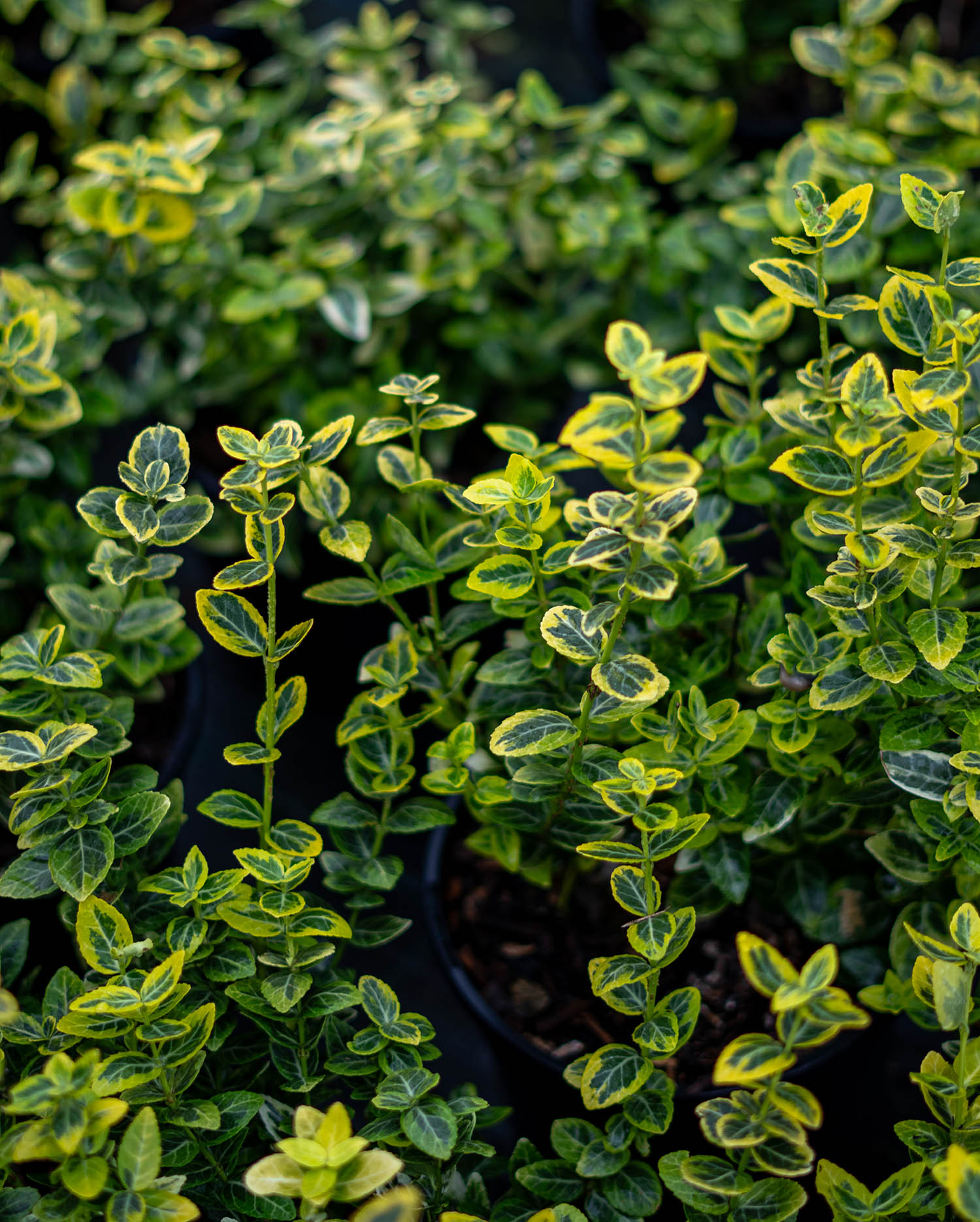
Euonymus fortunei ‘Emerald ’n’ Gold’
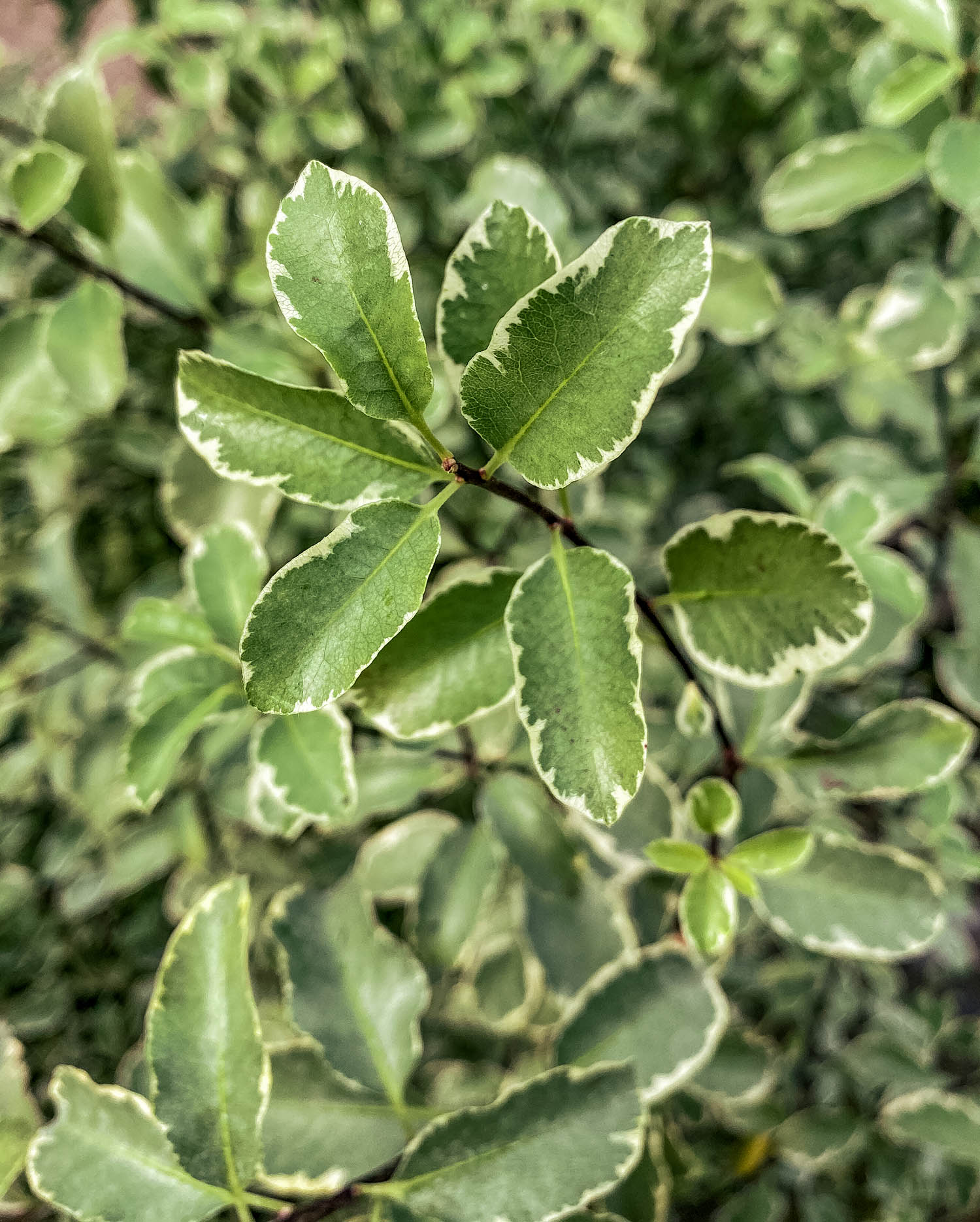
Pittosporum tenuifolium ‘Silver Queen’
Euonymus fortunei ‘Emerald ’n’ Gold’
A dependable evergreen shrub widely used in commercial schemes. Its bright green leaves edged in golden yellow hold their colour through winter and bring a warm glow to beds, borders and underplanting. The compact, bushy habit makes it useful for groundcover or low hedging, and it tolerates a range of soils and exposures. The variegation brings light into shaded areas where other plants may fade.
Pittosporum tenuifolium ‘Silver Queen’
This popular evergreen has soft grey green foliage framed with a creamy white margin. The thin, wavy leaves bring movement and texture across the colder months. It is often used for screening, structural planting or mixed borders where subtle colour contrast is needed. Its airy form makes it a useful plant for softening hard edges and adding depth to contemporary designs.
Hebe ‘Silver Anniversary’
Compact evergreen shrub with dense, silvery grey variegated foliage edged in creamy white. Leaves hold their colour well throughout the year, providing strong contrast in mixed planting schemes. Small white flowers appear in summer, adding seasonal interest without detracting from the foliage. Well suited to coastal and urban sites, and commonly used in commercial landscapes for structure, low maintenance, and year round visual interest.
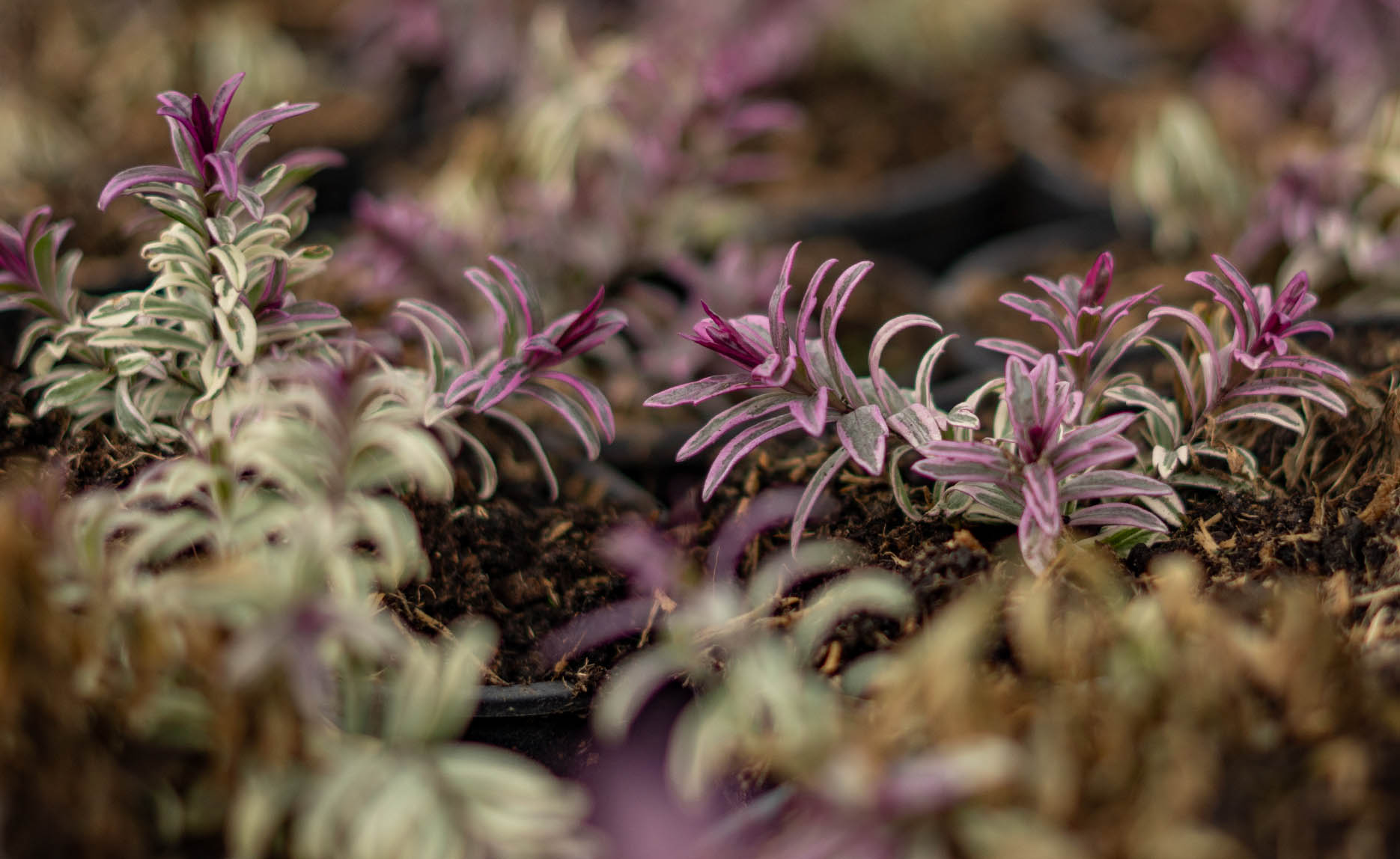
Hebe ‘Silver Anniversary’
Aucuba japonica ‘Variegata’
Often called the spotted laurel, this evergreen shrub has large glossy leaves splashed with bright yellow. It excels in shade and is ideal for adding colour beneath trees or in north facing areas. Its dense structure provides valuable shelter for birds in winter, making it a strong dual purpose plant for aesthetic and ecological value.
Elaeagnus ebbingei ‘Gilt Edge’
A robust evergreen with glossy green leaves bordered with bright gold. Known for its resilience, it thrives in exposed or coastal sites where other shrubs might struggle. Its bold foliage stands out in winter planting schemes and offers reliable screening. The variegation also adds shine to darker spots, supporting year round visual interest.
Photinia x fraseri ‘Red Robin’
A standout evergreen known for its bright red young leaves. Although new growth is more prominent in the warmer months, enough colour remains through winter to add contrast and energy to planting schemes. It performs well as hedging, screening or a specimen shrub, and its strong form helps anchor winter borders.

Aucuba japonica ‘Variegata’

Elaeagnus ebbingei ‘Gilt Edge’

Photinia x fraseri ‘Red Robin’
Heuchera ‘Lime Marmalade’
Although often grown as a perennial, its vivid evergreen foliage makes it a useful winter plant in commercial landscapes. The bright lime leaves form neat mounds that hold their colour in colder conditions. It works well as underplanting, edging or in high footfall areas where a splash of winter brightness is needed.

Heuchera ‘Lime Marmalade’
Designing with evergreen plants
Evergreen plants play a central role in shaping a landscape that performs well throughout the year. Their consistency, structure and colour support a scheme at the points when it is most vulnerable, especially during winter when daylight is short and the planting palette is reduced. It protects the landscape’s identity and allows it to function across all seasons.
Evergreen shrubs and trees help maintain clear lines, boundaries and focal points once deciduous plants have shed their leaves. Paths that feel defined in summer can lose their edges in winter, but evergreens hold those shapes in place, guiding movement and reinforcing the layout. In commercial and public schemes, this matters for safety as well as aesthetics. A landscape that retains structure helps visitors understand space, navigate routes and experience the site as intended, even in low-light months.
Evergreens also support microclimates within planting areas. Their year round foliage reduces wind speed, moderates temperature swings and provides cover for birds, insects and small mammals when other plants are dormant. This can improve the performance of neighbouring species, especially more delicate plants that benefit from calmer and slightly warmer pockets within the landscape. For urban spaces, the shelter offered by evergreen planting can help reduce noise and soften the impact of hard surfaces. This makes them valuable tools for creating comfortable, functional outdoor environments that remain inviting throughout the year.
Texture and contrast are key design benefits. The rich greens, glossy surfaces and varied leaf shapes of evergreen species help break up winter monotony. When combined with variegated plants, this contrast becomes even stronger. Variegated shrubs introduce lighter tones that brighten shaded areas and reflect more of the low winter sun. Small changes in colour help define borders, soften transitions between materials and draw attention to key features such as entrances, seating areas or signage. When used well, evergreens can create sequences of visual interest that guide the eye across a space, preventing the flat appearance that often characterises winter landscapes.
Many evergreen species are also well adapted to tougher conditions, and stand up well to stress, often retaining their colour and health where other plants may struggle. Their resilience is one of the reasons they are commonly used for business parks, housing developments, education sites and public green spaces. They are dependable, tidy and long lasting, which helps reduce maintenance demands over time. They can handle public footfall, and stand up to abrasion from human activity.
By choosing evergreen plants with striking foliage, designers gain the freedom to create landscapes that provide year round interest. Colour, structure and movement continue through winter, and planting plans become more resilient to seasonal change. When used in planting schemes, evergreen species allow landscapes to deliver year round value for people and wildlife alike, ensuring that outdoor spaces remain engaging, functional and visually stable from season to season.
If you would like more information on the foliage-rich species of evergreen that we grow and sell, speak to the G Team today.