


Focus on: Cornus (dogwood)
A closer look at colourful stems, seasonal interest and reliable structure
Cornus is a diverse genus of shrubs and small trees found across Europe, Asia and North America, with several species native to Britain. Its widespread distribution reflects its adaptability and resilience, traits that make it a popular choice in UK landscaping today. The name Cornus is derived from the Latin word cornu, meaning “horn”, a reference to the hard, dense wood historically used for tool handles, weaving shuttles and small implements. This toughness remains one of the genus’s defining features, allowing dogwoods to cope with varied soils, cold winters and exposed sites.
In the landscape, Cornus is valued for its clear seasonal rhythm. Many species flower in spring, producing small clusters of white or cream blossoms that attract pollinators. Summer brings broad green foliage, followed by fruit in some species and warm autumn colour. Their most remarkable display arrives in winter, when the leaves fall and the stems become exposed. The intense reds, oranges and yellows seen in species such as Cornus alba and Cornus sanguinea are produced by pigments called anthocyanins and carotenoids. These pigments grow stronger as temperatures drop, becoming more visible once the foliage has fallen. Bright winter stems are an adaptation that helps protect young shoots from cold and sun damage, though in landscaping they are appreciated primarily for their visual impact.
Cornus also plays an important ecological role. Its flowers support early pollinators, its berries feed birds, and its dense growth offers shelter throughout the year. These qualities make it suitable for wildlife-friendly schemes, sustainable planting and larger public landscapes where low maintenance and resilience are essential. Because Cornus tolerates wetter soils, it is also useful in rain gardens, attenuation basins and areas prone to winter waterlogging.
With strong structure, multi-season interest and dependable performance, Cornus remains one of the most practical and versatile genera for modern UK planting schemes.
Key Characteristics of Climbing Plants:
✓ Deciduous shrub or small tree
✓ Noted for colourful winter stems
✓ Spring flowers and autumn foliage colour
✓ Tolerates wet soils and exposed locations
✓ Low maintenance and reliable structure
✓ Valuable for wildlife
✓ Effective in mass planting and mixed borders
Cornus in Landscaping
Cornus is commonly used in commercial landscapes for its reliability, low maintenance needs and seasonal impact. The genus works well in structured winter borders, mixed native planting, public green spaces and near water bodies. It brings colour and clear form at a time of year when most shrubs are dormant, supporting year round interest in planting schemes of all sizes. Its long life span, wildlife value and tolerance of poor soils make it a practical and aesthetic solution for many UK landscapes.
Popular Cornus Varieties for UK Landscaping
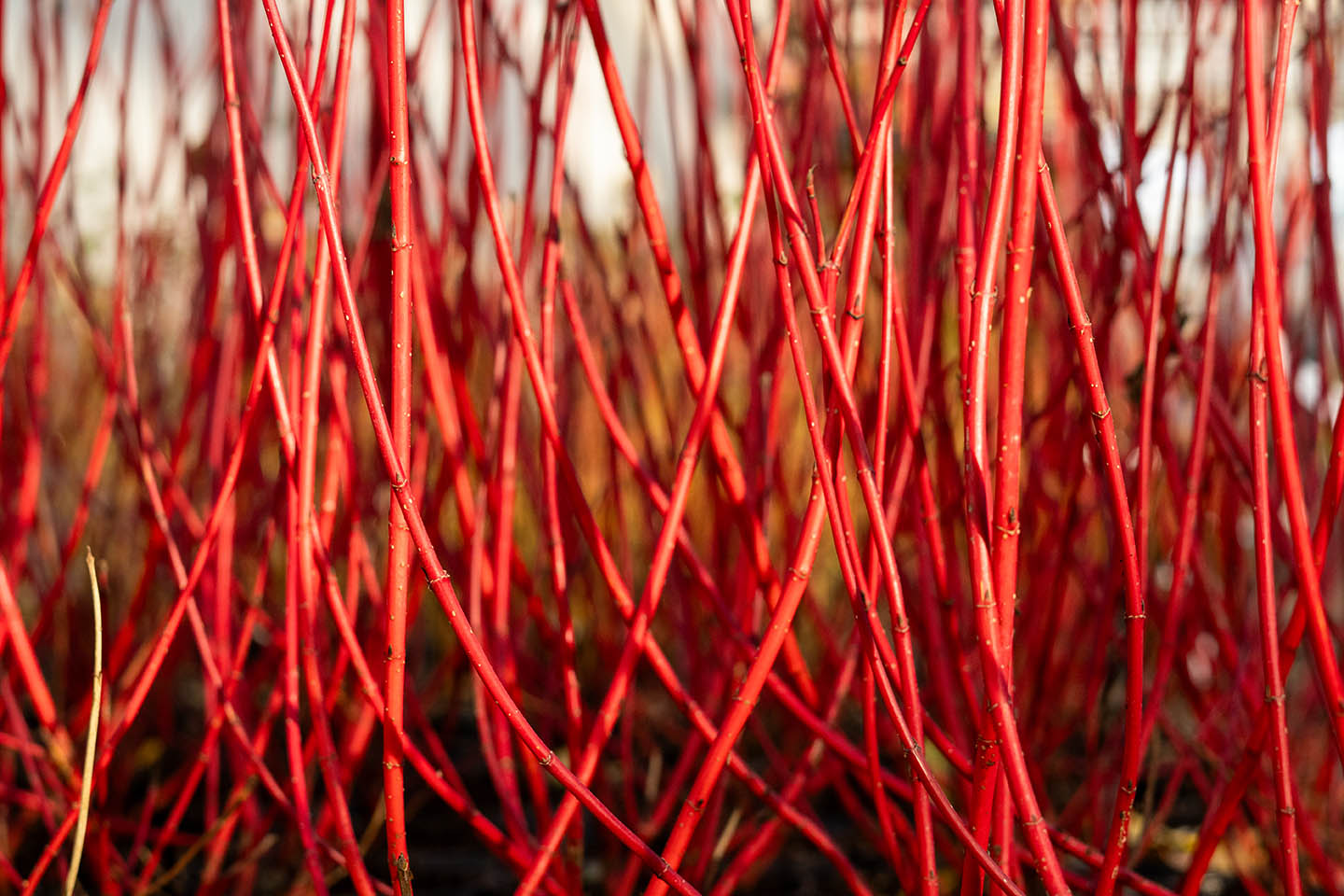
Cornus alba ‘Sibirica’
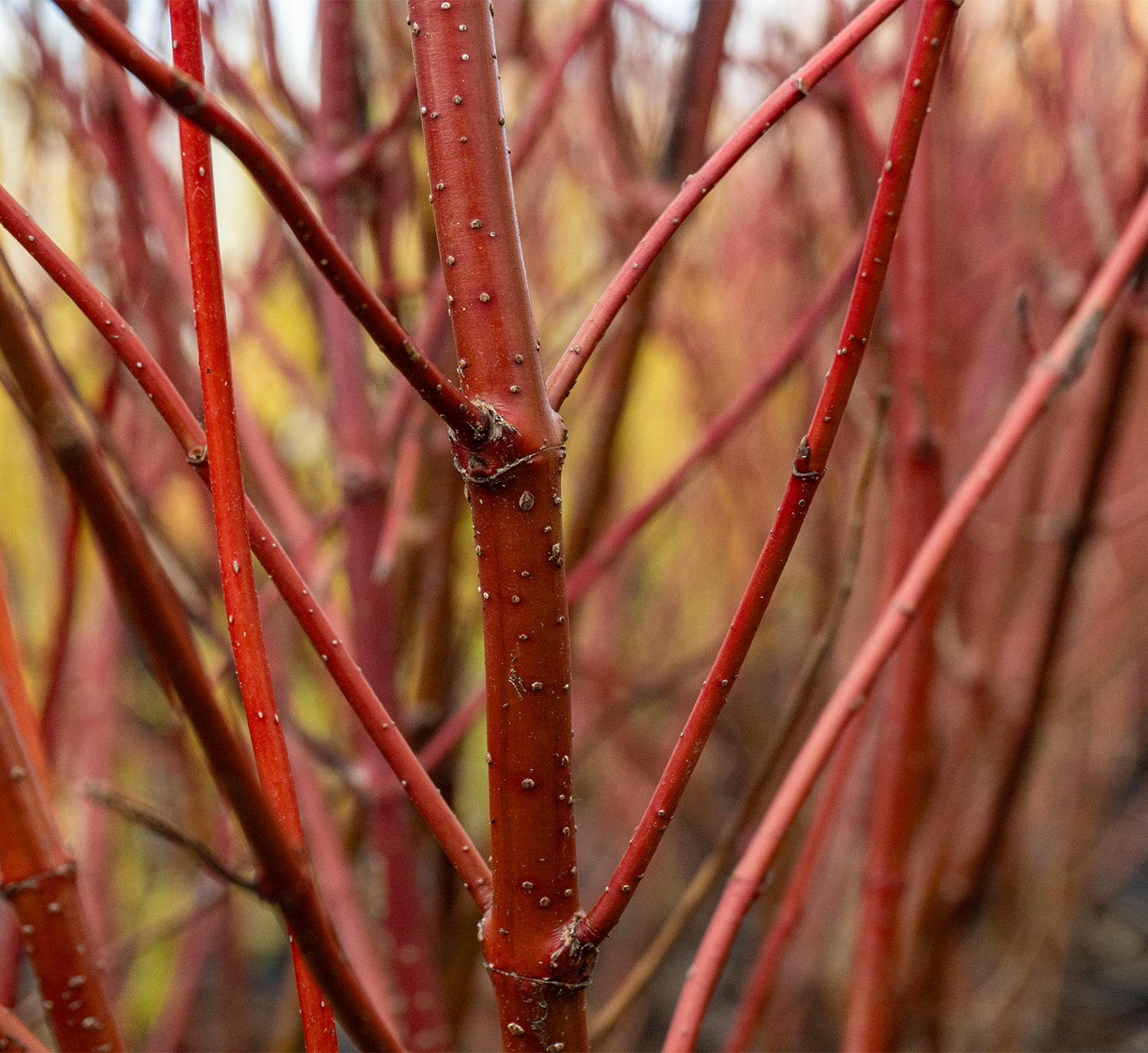
Cornus alba ‘Elegantissima’
Cornus alba ‘Sibirica’
Upright deciduous shrub with vivid red stems that intensify in winter. Green summer leaves followed by red and purple autumn colour. Small white spring flowers followed by white berries. Works well in massed groups for winter structure.
Cornus alba ‘Elegantissima’
Variegated form with grey green leaves edged in white. Red winter stems provide strong seasonal contrast. Produces white flowers and pale berries. Useful for brightening darker planting areas and adding texture.
Cornus sanguinea ‘Midwinter Fire’
Compact dogwood with stems that shift from yellow to orange to red through winter. Summer foliage is green, turning orange in autumn. Effective in groups where winter light highlights stem colour. Grows well in most soils.
Cornus sericea ‘Flaviramea’
Known for its bright yellow green stems that stand out in winter landscapes. Dense habit with green summer foliage and white flowers. Performs well in wetter soils, making it suitable for drainage areas and water edges.

Cornus sanguinea ‘Midwinter Fire’
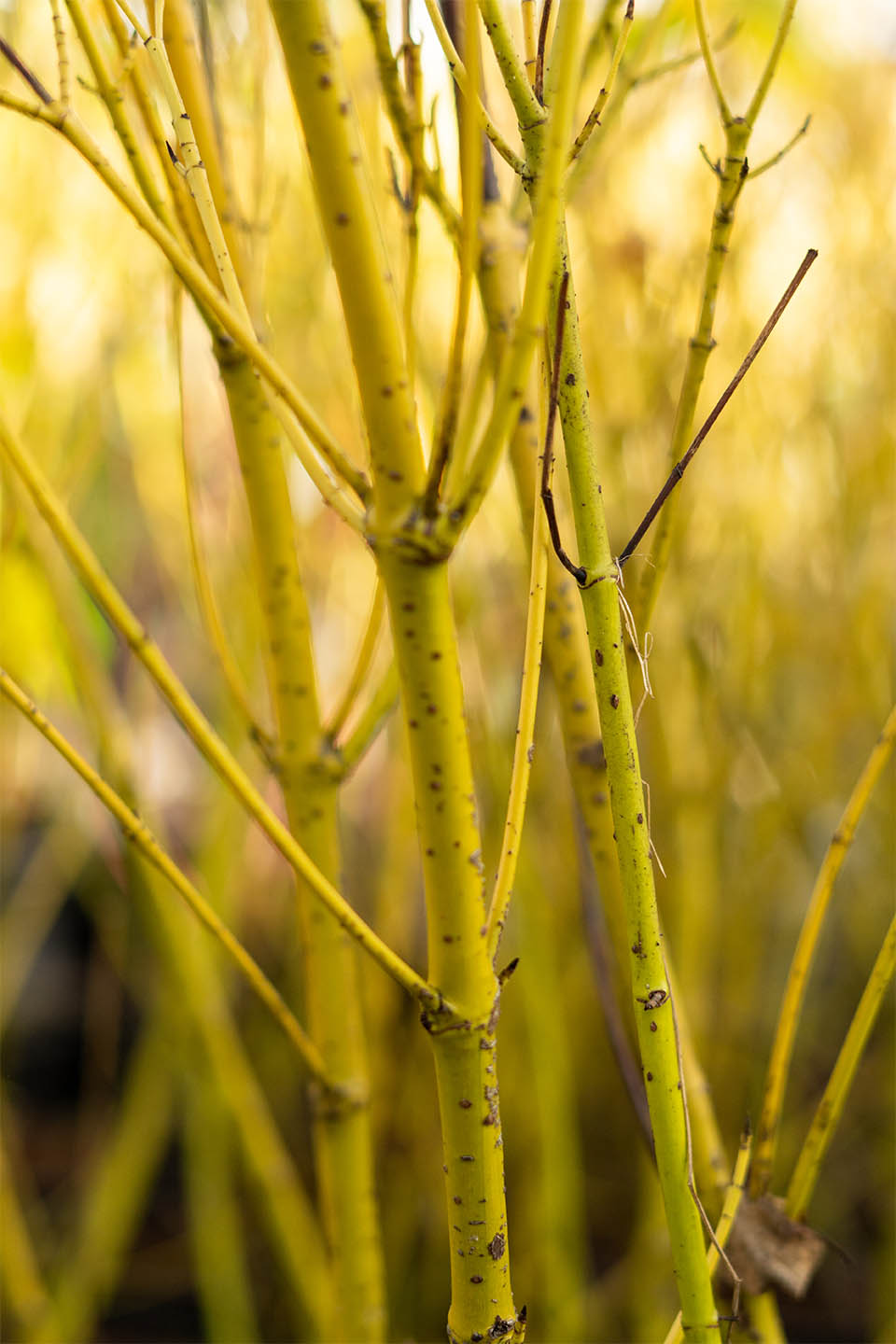
Cornus sericea ‘Flaviramea’
Cornus kousa
Small tree or large shrub with layered branching and creamy white spring bracts. Decorative pink red fruit in late summer and strong autumn leaf colour. Provides multi season interest and works well as a specimen plant.
Cornus mas
Early flowering dogwood producing clusters of small yellow flowers in late winter. Green foliage turns soft shades in autumn. Fruits develop into red cherry like drupes. Performs well in urban and open sites.
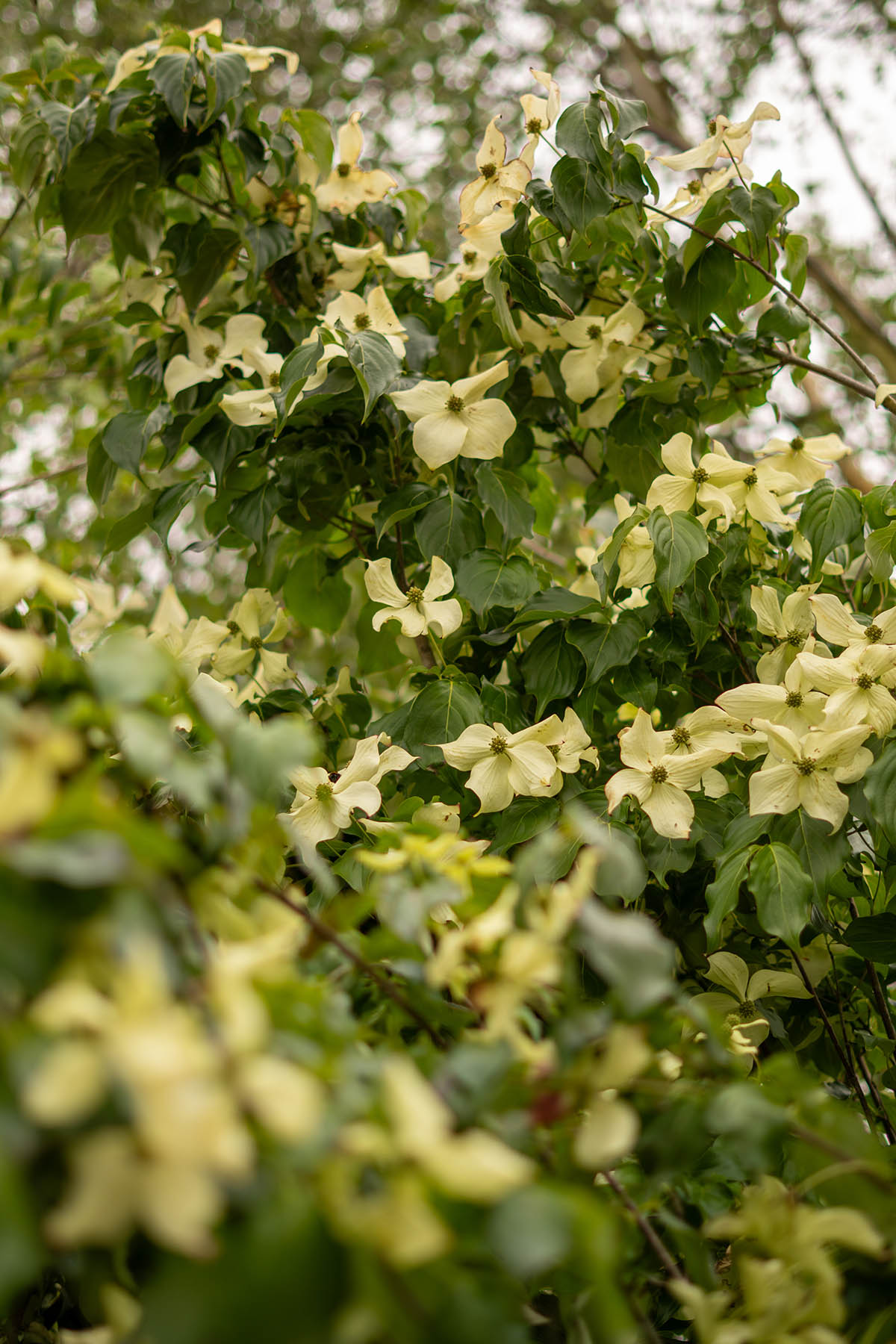
Cornus kousa

Cornus mas
How to Grow and Care for Cornus
Cornus is a resilient genus that thrives in most UK soils, including heavier clays, and is especially valuable on sites where the ground remains damp. While most species will grow in sun or partial shade, full sun produces the strongest stem colours in winter. Dogwoods benefit from regular pruning to a low framework in early spring. This encourages vigorous new shoots, which develop the brightest winter colour. Left unpruned, shrubs will become taller and less dense, with paler stems.
Mulching helps conserve soil moisture and maintain strong growth through summer. Many dogwoods cope well in exposed areas, making them suitable for open developments, carparks and large amenity spaces. When used in mass planting schemes, they create strong visual blocks that anchor spaces during winter and support biodiversity throughout the year.
Pests and diseases that affect this genus
Cornus is generally resilient, but several pests and diseases can affect its health, especially when plants are stressed or grown in poor conditions. Scale insects may appear as small bumps on stems and leaves, and heavy infestations can slow growth, while aphids can cluster on young shoots in spring and cause leaf curl or reduced vigour. Vine weevil is another concern, particularly for container-grown plants, as adult weevils notch the leaves and their larvae feed on the roots. Cornus can also be affected by fungal diseases such as anthracnose, which leads to leaf spots and occasional dieback, and general leaf spot, which creates brown or black patches that can become more noticeable in damp, crowded conditions. Canker may occur when stems are damaged or stressed, forming sunken lesions that can spread if not removed. Good cultural care makes a significant difference. Regular pruning helps remove any weakened wood, improves airflow and reduces disease pressure, while clearing fallen leaves and maintaining clean planting areas further supports plant health.
If you would like more information about the varieties of Cornus we grow and sell, speak to the G Team today.