


Plant Focus: Brunnera
Reliable groundcover with striking foliage and early season flowers
Brunnera is a hardy herbaceous perennial that has become a cornerstone of shade planting in UK landscapes. Valued for its broad, heart-shaped leaves and delicate spring flowers, it provides dependable structure and light in areas where many flowering plants struggle. Its ability to thrive in cool, partially shaded conditions has made it especially useful in woodland-style schemes, under tree canopies, and in sheltered urban courtyards.
The genus Brunnera belongs to the Boraginaceae family and is native to eastern Europe and western Asia, particularly regions around the Caucasus. The most widely cultivated species, Brunnera macrophylla, was introduced into European horticulture in the early nineteenth century as plant exploration expanded eastwards. Its woodland origins explain its preference for humus-rich soils and dappled light. The species name “macrophylla” translates as “large-leaved,” a reference to the broad foliage that has become its defining ornamental feature.
While Brunnera was initially grown for its forget-me-not-like flowers, modern breeding has shifted focus towards its foliage. Over the past two decades, variegated and silver-leaved cultivars have transformed the plant’s role in design. These newer forms reflect light into shaded areas, providing contrast and structure from spring through autumn. As planting design has increasingly embraced texture and leaf pattern, Brunnera has moved from being a supporting perennial to a focal ground layer in many commercial schemes.
In addition to its aesthetic value, Brunnera plays an important ecological role. Its early flowers provide nectar for pollinators emerging in spring, while its dense foliage creates cover for invertebrates at ground level. It is particularly effective when planted in drifts, forming a continuous layer that stabilises soil and reduces weed competition.
Key characteristics of Brunnera
✓ Herbaceous perennial
✓ Large heart-shaped foliage
✓ Early spring blue flowers
✓ Thrives in partial or full shade
✓ Suitable for moist, humus-rich soils
✓ Low maintenance once established
✓ Effective groundcover in woodland-style planting
Did You Know?
Brunnera flowers resemble true forget-me-nots, which belong to the same plant family. However, Brunnera is longer-lived and more substantial in growth, making it better suited to structured perennial planting schemes.
Brunnera in landscaping
Brunnera has become a key component in shade-tolerant planting palettes. Its foliage provides continuity between spring bulbs and summer perennials, maintaining visual interest long after flowering has finished. Silver cultivars are especially valuable in contemporary schemes, where foliage contrast is used to create depth and light within darker spaces.
When planted in drifts, Brunnera forms a cohesive ground layer that supports woodland-style compositions and stabilises soil beneath larger shrubs and trees. Its long-lived nature and minimal maintenance requirements make it a dependable choice for sustainable landscape design.
Popular Brunnera varieties we recommend:
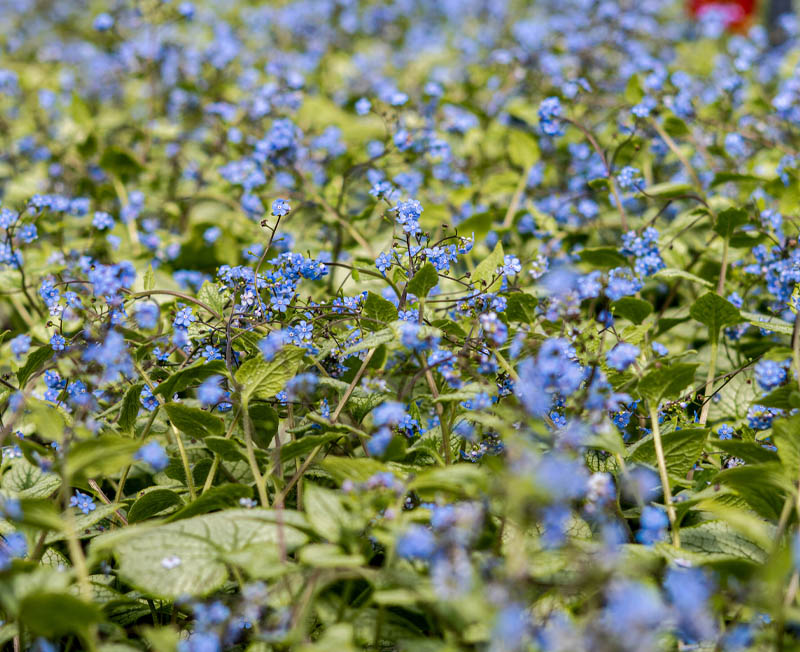
Brunnera macrophylla ‘Jack Frost’
Brunnera macrophylla ‘Jack Frost’
One of the most widely planted cultivars, known for its silver foliage marked with dark green veining. The reflective surface brightens shaded borders and contrasts well with darker evergreens. Clear blue flowers appear in early spring above the leaves. Forms a tidy clump and is reliable in a range of sheltered, shaded settings.
Brunnera macrophylla ‘Alexander’s Great’
A vigorous selection with larger leaves than ‘Jack Frost’, offering bold silver colouring and pronounced green veins. Suitable for creating substantial groundcover beneath trees or in expansive woodland schemes. Blue flowers appear in mid-spring. Performs best in consistently moist soils.
Brunnera macrophylla ‘Looking Glass’
Highly silvered foliage with reduced veining, creating a softer, almost metallic appearance. Compact growth habit makes it suitable for smaller beds or formal layouts. Early spring flowers provide additional seasonal interest.

Brunnera macrophylla ‘Alexander’s Great’

Brunnera macrophylla ‘Looking Glass’
Brunnera macrophylla ‘Silver Spear’
Lance-shaped leaves with a bright silver surface and narrow green veins. This variety forms a tidy clump and brings a cool, luminous effect to shaded planting schemes. Delicate blue spring flowers rise just above the foliage, adding light seasonal colour while keeping the planting design clear and balanced.
Brunnera macrophylla ‘Variegata’
Green leaves edged with creamy white margins. Offers a brighter, softer variegation compared to silver forms. Effective in lifting darker planting combinations and pairing with ferns or hostas in shaded areas.
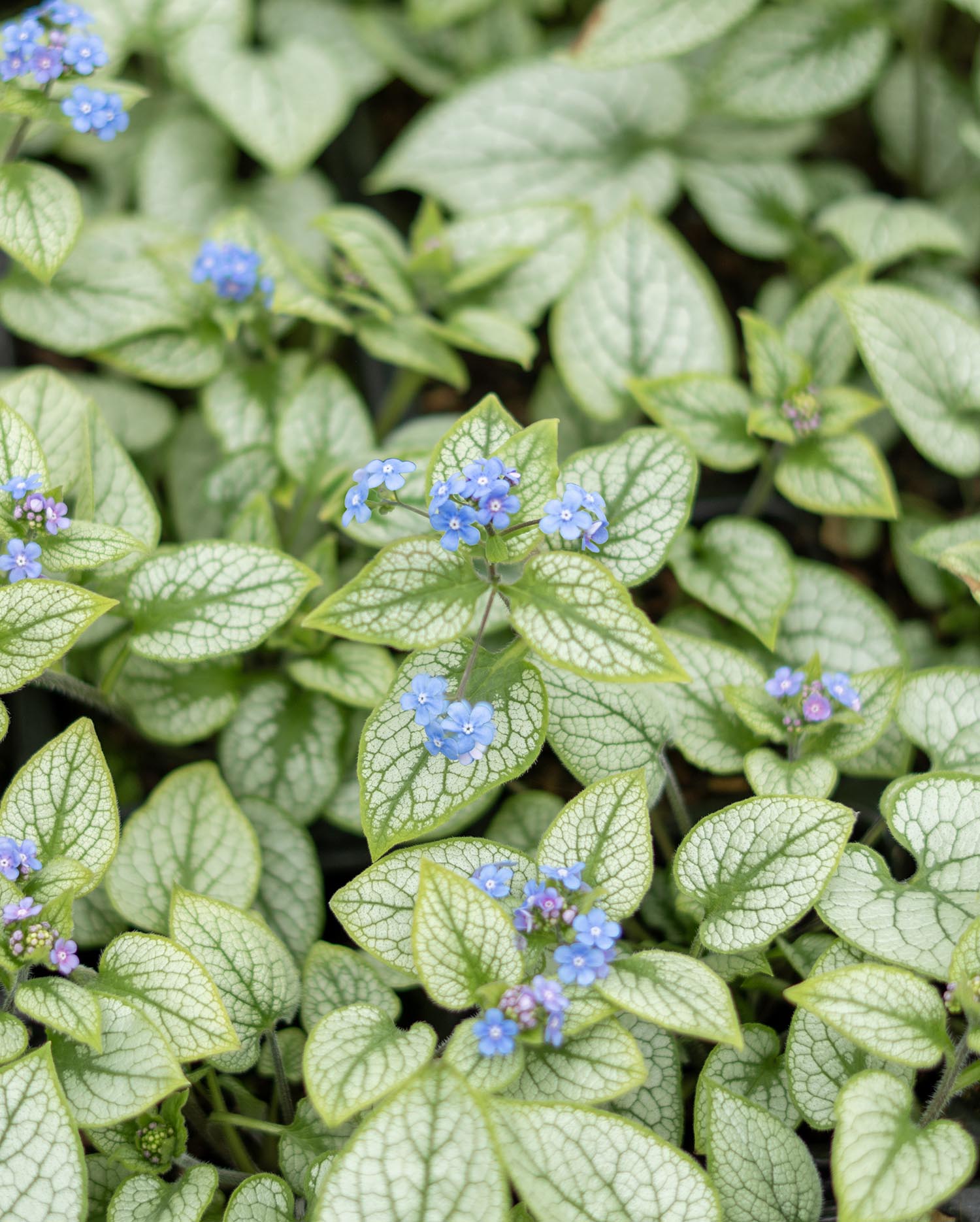
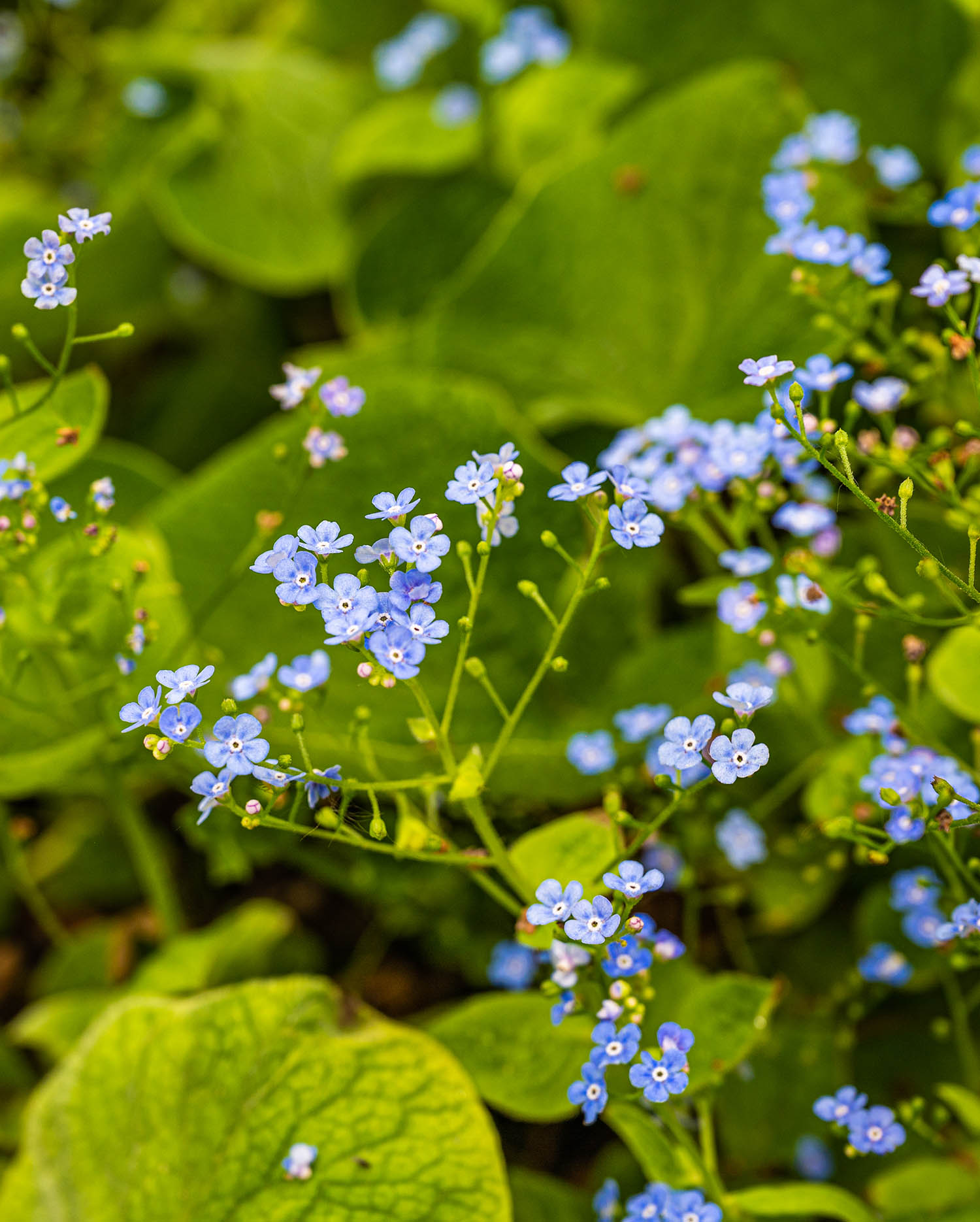
Brunnera macrophylla
The species form with solid green foliage and sky-blue spring flowers. Although less dramatic than modern cultivars, it is dependable and well suited to naturalistic or larger scale planting where subtle texture is preferred.
Brunnera macrophylla
How to grow and care for Brunnera
Brunnera performs best in moist, fertile soils that retain moisture but drain freely. It thrives in partial shade or dappled light and is particularly suited to planting beneath deciduous trees, where it benefits from spring sunlight before canopy leaf-out. While it tolerates full shade, flowering may be reduced in very low light.
Consistent moisture is important, especially during establishment and in warmer months. Extended drought can cause leaf scorch or premature dieback. Applying organic mulch annually helps conserve soil moisture, improve structure and regulate temperature around the roots. In heavier soils, ensure adequate drainage to avoid winter waterlogging.
Brunnera is hardy across most of the UK and dies back naturally in autumn. Removing spent flower stems keeps planting tidy, while cutting back damaged or tired foliage in late summer can encourage fresh leaf growth. Dividing established clumps every few years maintains vigour and allows for propagation across a scheme.
Once established in suitable conditions, Brunnera requires little intervention. Its dense leaf cover suppresses weeds and reduces ongoing maintenance needs, making it well suited to commercial landscapes where long-term management must remain efficient.
Pests and diseases
Brunnera is generally reliable, though young foliage can be susceptible to slugs and snails, particularly in damp spring conditions. Powdery mildew may develop in hot, dry summers if plants are stressed by lack of moisture. Ensuring adequate soil moisture and spacing plants for airflow reduces these risks. Overall, it is considered a robust and low-risk perennial for shaded planting.
If you would like more information on the different Brunnera varieties we grow and sell, speak to the G Team today.