


Shade-tolerant planting scheme


Shade-tolerant planting scheme
Shade is one of the more common conditions in modern landscaping, and one of the trickier to plant well. As urban areas become denser and more new developments retain mature trees as part of their design, shaded planting beds account for a growing share of every landscape brief. These beds can sit against north-facing walls, in interior courtyards, beneath retained tree canopy, or in narrow passages between buildings. Conditions of this kind filter or block sunlight for most of the day, and the species that perform here are not the ones we would specify for a sunny, open scheme.
This shade tolerant planting scheme has been developed with deep-shade conditions in mind, combining structural shrubs, ferns, foliage perennials and groundcover that perform reliably with little or no direct sunlight. Many of the selected species have natural adaptations for low light, such as large, glossy leaves that capture diffuse light efficiently, leathery foliage that holds up to sustained humidity, and spreading rhizomatous habits that allow them to cover difficult ground. Plants such as Aucuba japonica, Fatsia japonica, Disporopsis URBAFLORA® ‘Shade Runner’ and Helleborus × hybridus are particularly well adapted to these conditions and perform reliably in beds that receive no direct sun.
The scheme uses a layered planting approach, which helps plants support each other visually and creates a calm, natural appearance even in dim conditions. Taller structural species at the back, including Aucuba japonica, Fatsia japonica, Sarcococca confusa and Hydrangea arborescens ‘Annabelle’, provide year-round bulk, deep evergreen colour and bold foliage shapes that anchor the bed. Through the middle, ferns and foliage perennials such as Polystichum setiferum, Dryopteris filix-mas, Hosta sieboldiana var. elegans, Brunnera macrophylla ‘Jack Frost’ and Helleborus × hybridus introduce texture, silvered foliage and quiet seasonal flowering. At the front, dense groundcover plants including Disporopsis URBAFLORA® ‘Shade Runner’, Geranium macrorrhizum ‘Spessart’, Epimedium × versicolor ‘Sulphureum’ and Pachysandra terminalis protect the soil surface, suppress weeds and keep moisture stable through the warmer months.
In addition to being resilient, this planting scheme also supports biodiversity and wider environmental function. Helleborus × hybridus and Sarcococca confusa flower in late winter and early spring, providing nectar and pollen at a time when very few other sources are available to bumblebees and early hoverflies. Evergreen groundcover holds the soil through the year, reduces water loss during dry spells, and helps surface temperatures stay lower in beds enclosed by hard architecture. Shaded planting of this kind also softens the experience of dense urban environments, where cool, layered greenery offers a visual contrast to the surrounding built fabric.
Well-designed shade tolerant schemes like this one play an important part in the way modern landscapes work. They turn the leftover, low-light parts of a site into reliable evergreen planting that needs relatively little maintenance. Even in deep shade, they extend the area of every project that contributes to a cooler, greener and more biodiverse environment.
1. Aucuba japonica 2. Fatsia japonica 3. Sarcococca confusa 4. Hydrangea arborescens ‘Annabelle’ 5. Polystichum setiferum 6. Brunnera ‘Jack Frost’ 7. Hosta sieboldiana var. elegans 8. Dryopteris filix-mas 9. Helleborus × hybridus 10. Disporopsis URBAFLORA ‘Shade Runner’ 11. Geranium macrorrhizum ‘Spessart’ 12. Epimedium ‘Sulphureum’ 13. Pachysandra terminalis

①
Aucuba japonica variegata
Commonly known as spotted laurel, this robust evergreen shrub has large, glossy, leathery leaves, often boldly speckled with yellow on variegated cultivars. Tiny purple-brown flowers appear in spring, followed by bright red berries on female plants. Performs in deep, dry shade where few other shrubs cope, and tolerates urban pollution and atmospheric extremes well.

②
Fatsia japonica
Otherwise known as Japanese aralia, a bold architectural evergreen with very large, glossy, palmate leaves that bring a tropical character to deep shade. Cream-white drumstick flowers appear in late autumn, followed by small black berries. One of the few large shrubs that thrives in full shade, including beneath dense building overhangs.

③
Sarcococca confusa
Commonly known as Christmas box, a dense evergreen shrub with glossy dark green leaves and a compact, rounded habit. Tiny white flowers appear from December to March and carry a strong sweet scent that drifts on still winter air, followed by glossy black berries. Reliable in dry shade beneath trees and against north-facing walls.
④
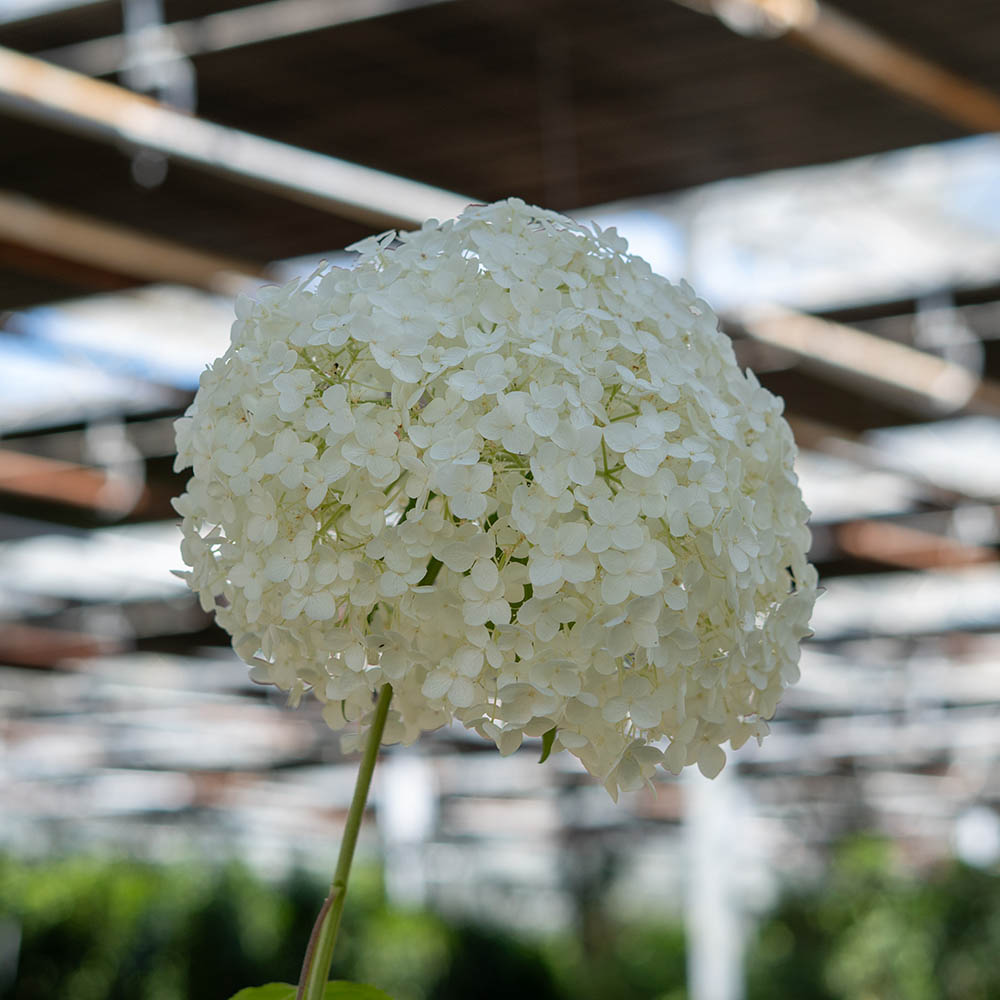
Hydrangea arborescens ‘Annabelle’
A deciduous shrub with broad, mid-green leaves and very large, dome-shaped white flower heads from midsummer to early autumn. The blooms open lime-green, mature to pure white, and fade to soft beige into late autumn. Cut back hard in late winter to encourage stronger stems and bigger flowerheads the following season.
⑤
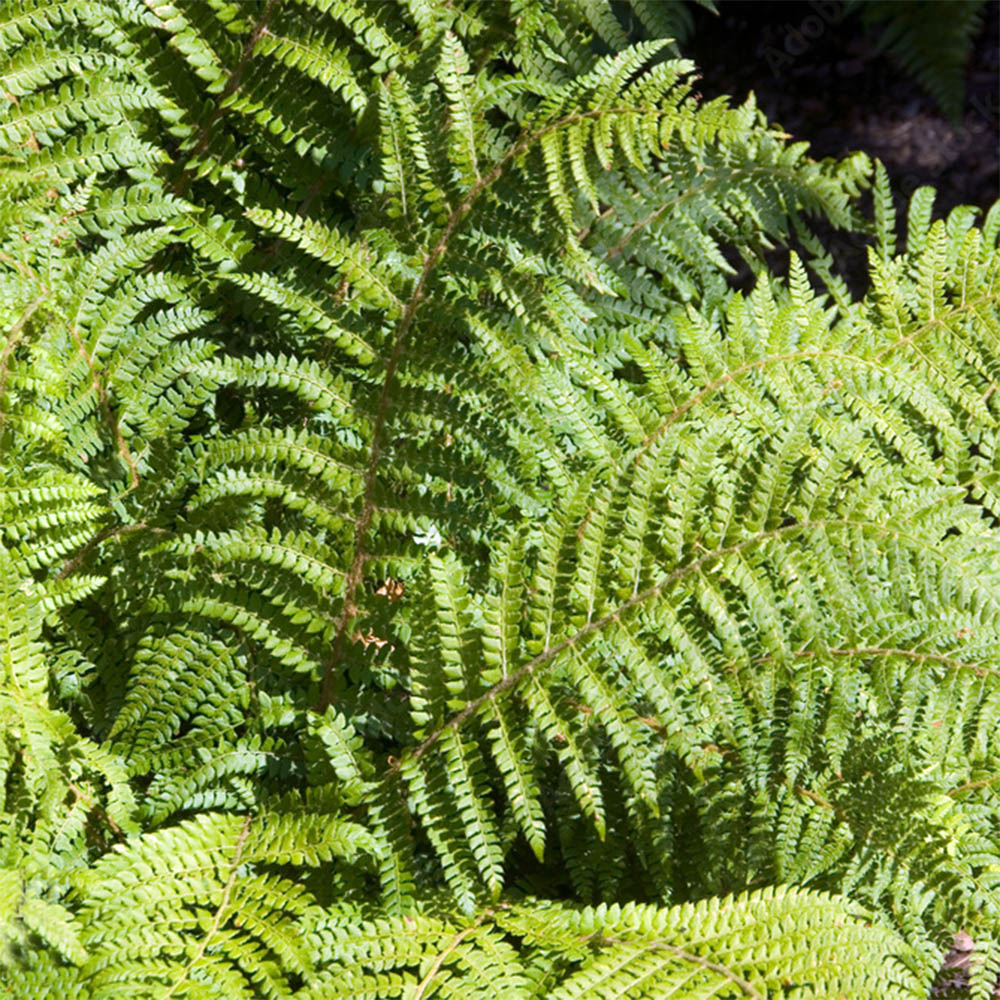
Polystichum setiferum
Known colloquially as the soft shield fern, a large native evergreen that forms a softly arching shuttlecock of dark green fronds on orange-brown stalks. The fronds unfurl through spring, giving a long season of textural interest. Particularly useful as a structural fern beneath deciduous trees.
⑥
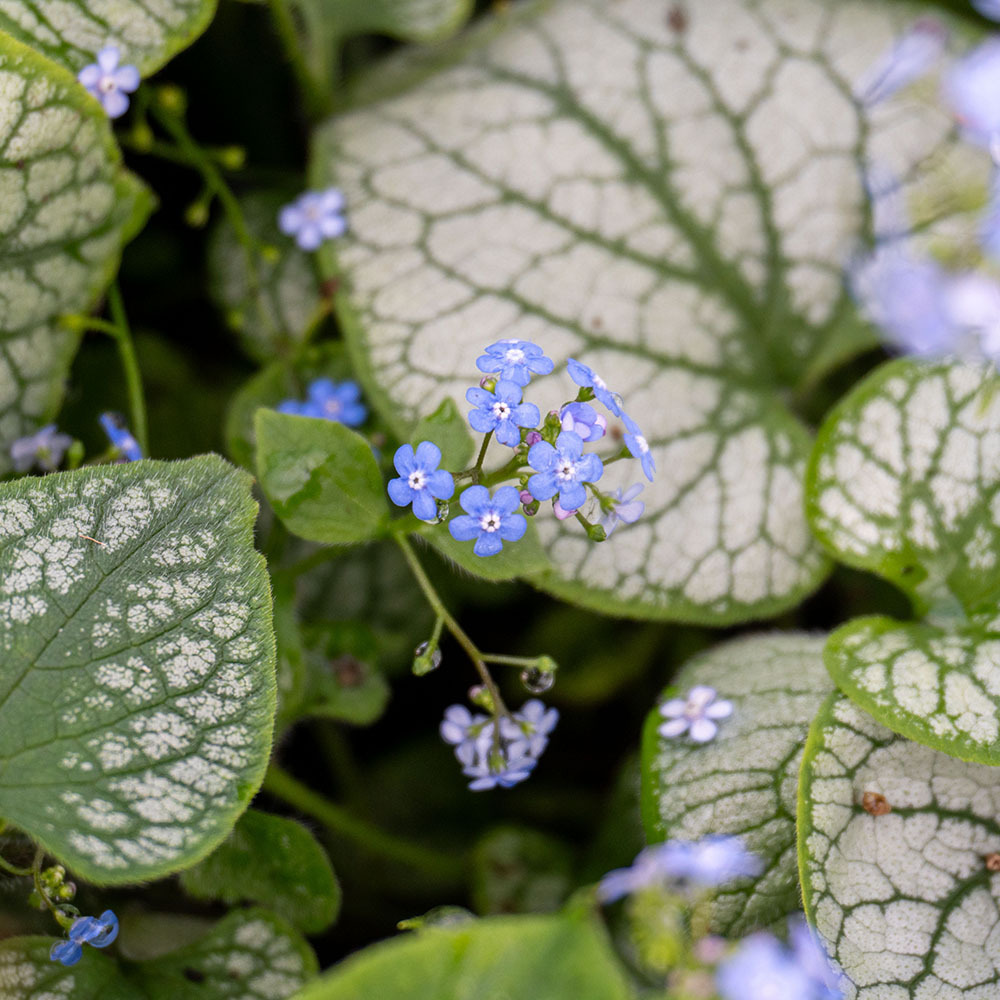
Brunnera macrophylla ‘Jack Frost’
A clump-forming herbaceous perennial with large, heart-shaped leaves marked in silver between green veins. Tiny forget-me-not-like blue flowers appear on slender stems in spring. The silvered leaves lift dark corners and read well against ferns and evergreen shrubs.

⑦
Hosta sieboldiana var. elegans
A large herbaceous perennial with strikingly puckered, glaucous blue-grey leaves that hold their colour through summer in deep shade. Pale lilac-white flowers appear on short spikes in early summer. Among the most reliable hostas for low light, where gold cultivars tend to revert to green.
⑧
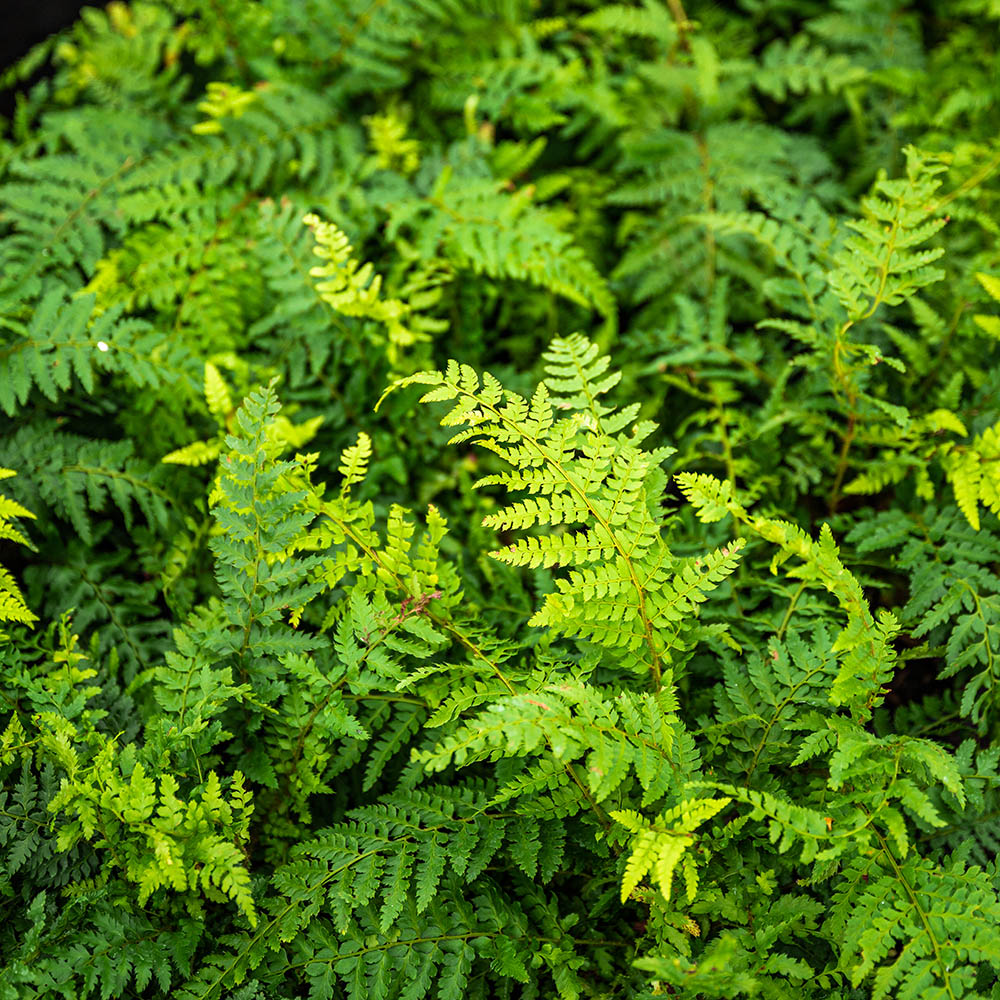
Dryopteris filix-mas
Commonly known as the male fern, a large deciduous native that carries lance-shaped, lacy green fronds in a tall shuttlecock. The fronds turn a warm copper before dying back in autumn. Tolerates dry shade once established and copes with poor soils where most ferns fail.

⑨
Helleborus × hybridus
A clump-forming, semi-evergreen perennial with leathery dark green leaves and nodding, cup-shaped flowers in shades of white, pink, plum and pale green from late winter into early spring. Provides flower interest at a time of year when most planting is dormant, and self-seeds gently into woodland-edge conditions.

⑩
Disporopsis URBAFLORA® ‘Shade Runner’
Otherwise known as evergreen Solomon’s seal, a hardy, low-growing perennial that spreads via creeping rhizomes to form a dense carpet of arching, glossy green leaves. Bred specifically for full shade where standard groundcover struggles, including beneath retained trees and on north-facing aspects. Suppresses weeds reliably and holds its foliage through winter.

⑪
Geranium macrorrhizum ‘Spessart’
A vigorous herbaceous perennial with aromatic, deeply lobed leaves that take on red and orange tints in autumn. Pale pink to white flowers appear in late spring. One of the most reliable groundcovers for dry shade beneath trees and shrubs.
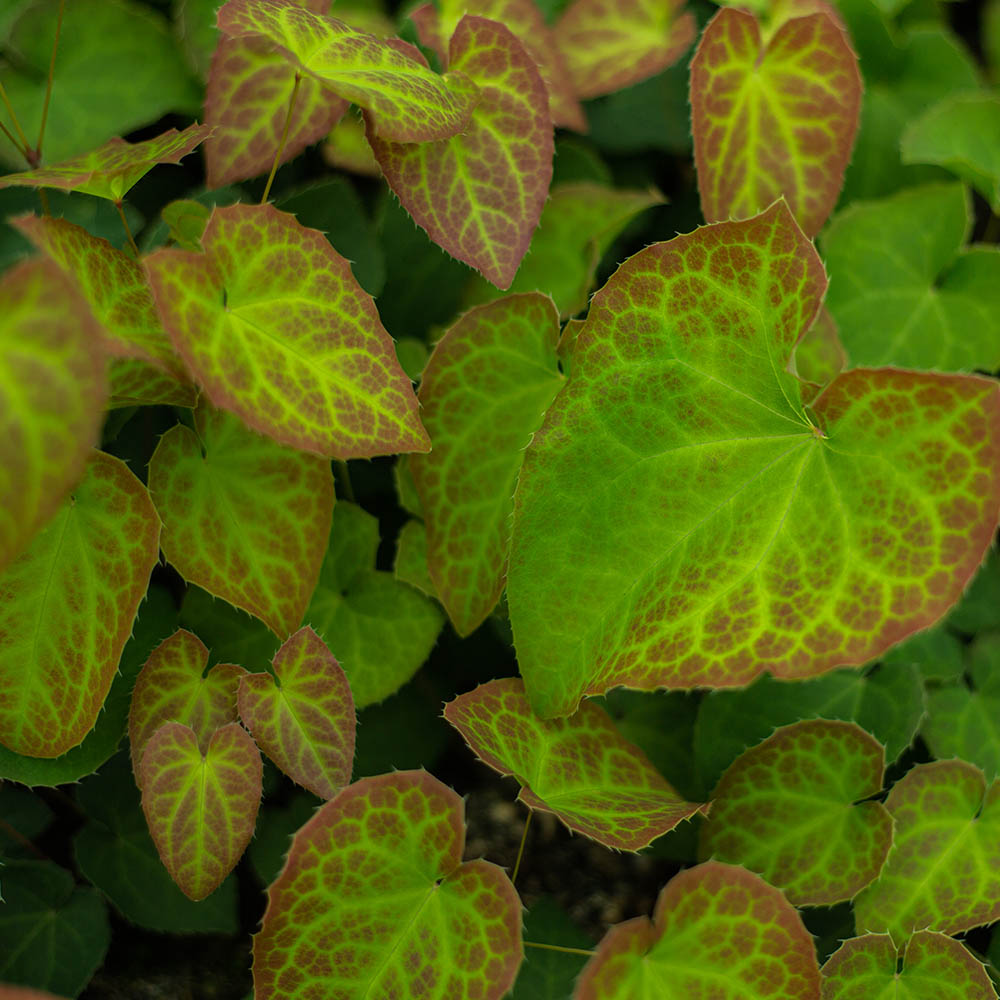
⑫
Epimedium × versicolor ‘Sulphureum’
Known colloquially as bishop’s hat, this clump-forming, semi-evergreen perennial carries heart-shaped, bronze-tinted young leaves and delicate sulphur-yellow flowers on wiry stems in spring. Spreads slowly to form a low layer beneath shrubs and trees, and tolerates dry shade.

⑬
Pachysandra terminalis
Commonly known as Japanese spurge, a low, spreading evergreen with glossy, dark green, diamond-shaped leaves arranged in whorls on short stems. Small white flowers appear in spring above the foliage. A long-established workhorse for full-shade groundcover where reliable, even coverage matters more than seasonal flair.
Notes
Hydrangea arborescens ‘Annabelle’ performs best in cool, moisture-retentive shade rather than very dark, dry shade. On sites that are strongly north-facing, sit beneath dense tree canopy, run close to building foundations, or stay dry at root level, flowering may reduce noticeably. In those conditions, swap ‘Annabelle’ for a second Aucuba cultivar, Skimmia japonica, or Mahonia eurybracteata ‘Soft Caress’, all of which carry summer presence without depending on consistent root moisture. If a deep-dry-shade, urban-canyon, or under-tree-canopy version of this scheme is drawn later, the substitution should be made at that point.