


How plants are specified and graded
Pot sizes, heights, girths and root forms, and what each measurement says about the plant that arrives on site
A planting plan describes what a scheme should look like, but the plant schedule that goes with it is a list of measurements. Each line names a plant and then a pot size, a height, a girth or a root form, and those few figures decide what is quoted, what is delivered and how the planting looks on the day it goes in. When they are clear and realistic, the plants that arrive match the drawing. When they are not, the result is a round of substitutions, revised quotes and disappointed expectations.
A schedule sometimes asks for a shrub at a height that the specified pot size cannot carry, or for a tree in a root form that is not available at the time of year the scheme will be planted. Neither is a mistake of horticulture so much as a gap between how designers think about plants, by size and effect, and how nurseries grow and sell them, by container, girth and season.
That gap is the reason Greenwood wrote the Greenwood Specification, a guide covering more than 400 popular plants with the pot sizes, heights and forms in which they are actually supplied, using the same measurements as the rest of the industry.
Pot sizes and what they measure
Most container plants are sold by the volume of growing medium in the pot. A C5 is a container holding 5 litres, a C10 holds 10 litres, and the same logic runs from C1 up to large specimen pots of C50. Pots of less than a litre are described by diameter instead, so a P9 is a pot 9cm across.
Pot volume tells you about the root system and the age of the plant, but it does not fix the height. Two plants in the same size of pot can be very different sizes above ground, because every species grows at its own rate and to its own habit. In the Greenwood Specification, a 2-litre Cotoneaster radicans is listed at 10-20cm tall while a 2-litre Cotoneaster franchetii is 30-40cm, and in a 10-litre pot Hedera helix reaches 120-150cm against 30-40cm for the fern Polypodium vulgare.
Container plants are measured from the surface of the growing medium to the top of the plant. Height within a size band also varies with how recently the plant was potted on, since freshly potted stock sits at the smaller end of the range for its species, and with the watering and feeding it has had while growing.
Specifying shrubs and perennials by pot and height
Because pot size and height describe different things, the most reliable way to specify a shrub, perennial, grass, fern or climber is to give both. The Greenwood Specification sets each plant against five standard pot sizes, 2L, 3L, 5L, 7.5L and 10L, with the height band that a plant of that species typically reaches in each one. A line on a schedule that pairs the two, Hedera helix in a 5-litre pot at 80-100cm for example, gives a supplier something concrete to price and gives the client a clear picture of what will arrive.
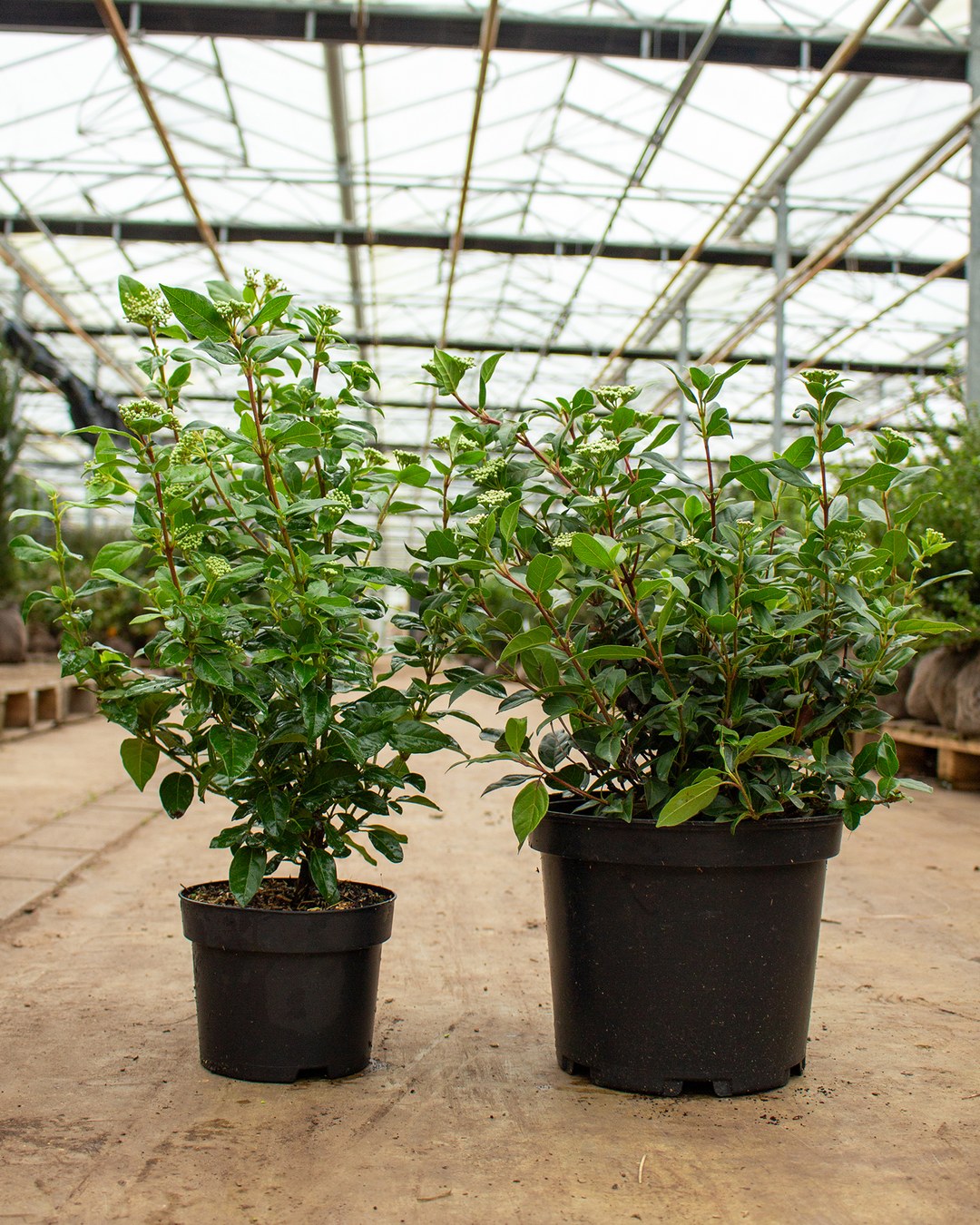
The choice of size is largely a balance between budget and impact. Younger plants in smaller pots are more economical and can be easier to transplant, while more mature plants in larger pots establish more readily and meet the visual demands of many commercial and new-build schemes from the start. Hedging intended to give an instant effect is likely to need pots of 7.5 litres or more.
Asking for a height that a species cannot reach in the specified pot is one of the most frequent sources of substitution. If a scheme needs a particular height, it is worth checking that the pot size on the schedule is one in which that species normally reaches it.

How trees are measured
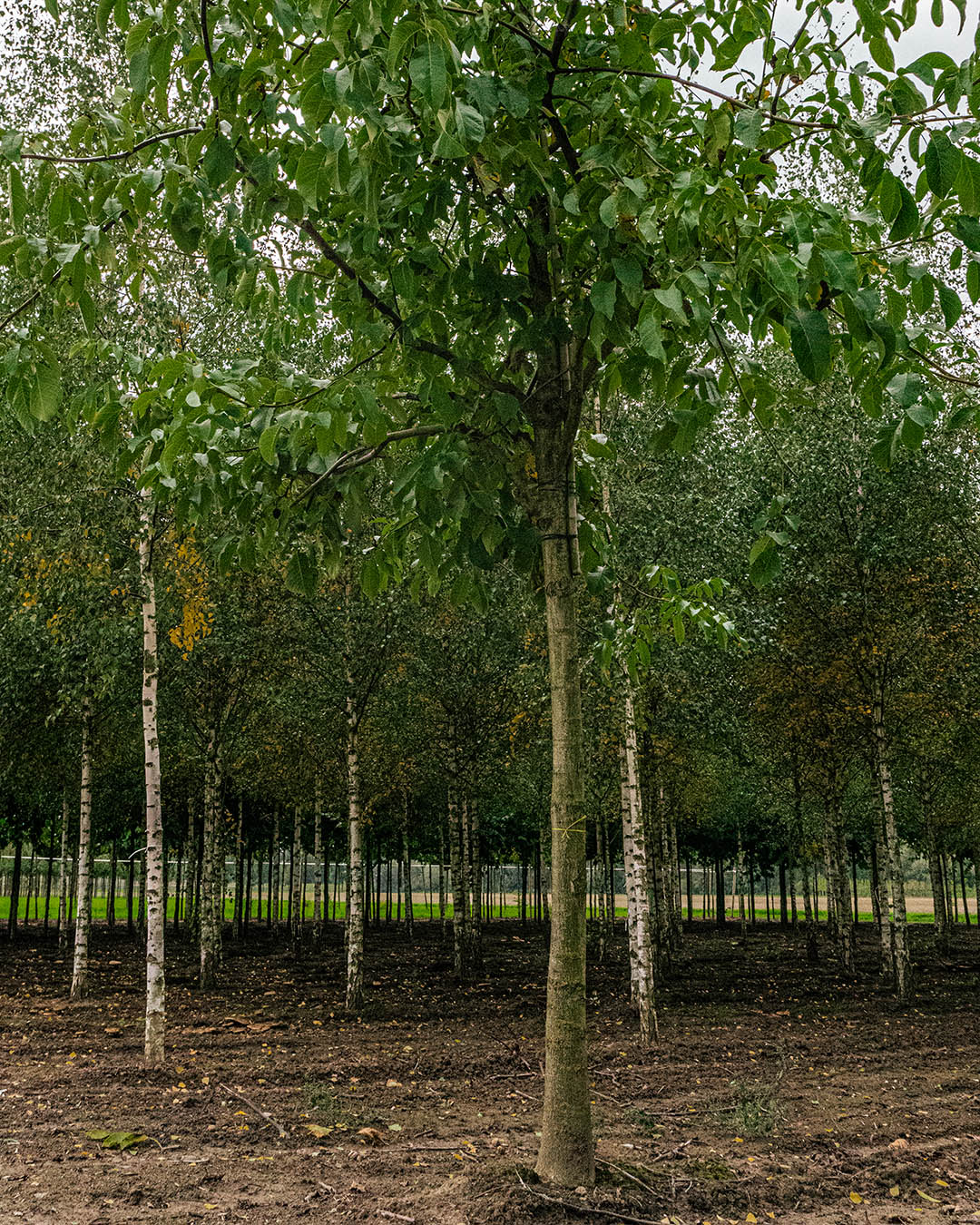
Trees are graded mainly by girth, the circumference of the trunk measured one metre above the soil. Girth is the main indicator of a tree’s maturity, and it is the main specification for a standard tree. The Greenwood Specification lists trees in seven girth bands, from 8-10cm through 10-12, 12-14, 14-16, 16-18 and 18-20cm up to 20-25cm.
Those bands correspond to the familiar grade names used across the trade, from standard at 8-10cm through select standard, heavy standard and extra heavy standard as the girth increases. On average a tree grows by about one girth size a year. A tree of 8-10cm girth needs several years of growth before it makes a real visual impact, while one of 16-18cm makes an impact the day it is planted.
Girth is not the only figure that matters, and the right measurement depends on the form of the tree. A standard has a single straight trunk clear of branches for at least the first 1.8m, and is specified by girth first, with pot size as the secondary figure. A half-standard has a clear stem of 1.2m to 1.5m and is specified by both girth and pot size. Feathered trees, which carry side branches from close to the ground, and multi-stemmed trees are specified by height and pot size instead, since a girth measurement says little about a tree with several stems or branches all the way up. Pleached and roof-trained trees add the dimensions of the trained frame to the girth.
Container-grown trees start at around 4.5 litres, although specimen or feature trees are more likely to be in a pot of 15 litres or more, which usually holds a tree of at least 120cm in height. Even then, the pot is a secondary figure for a tree, and the girth and form remain the main specification.

Bare root, rootball and container grown
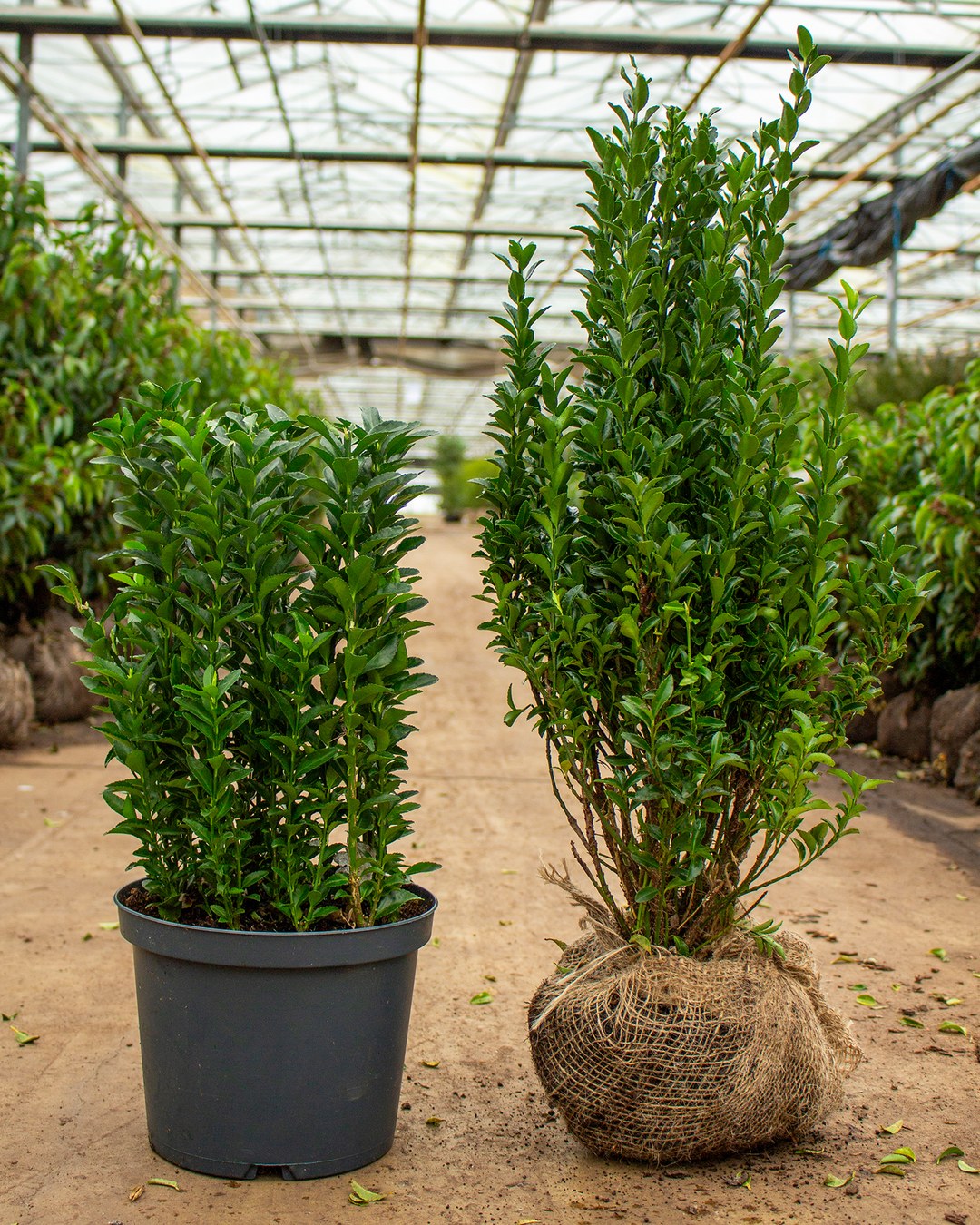
Bare-root trees and hedging are grown in the field and lifted while they are dormant, with the soil removed from the roots. Because they are light and easy to transport, they are the most economical of the three root forms to buy.
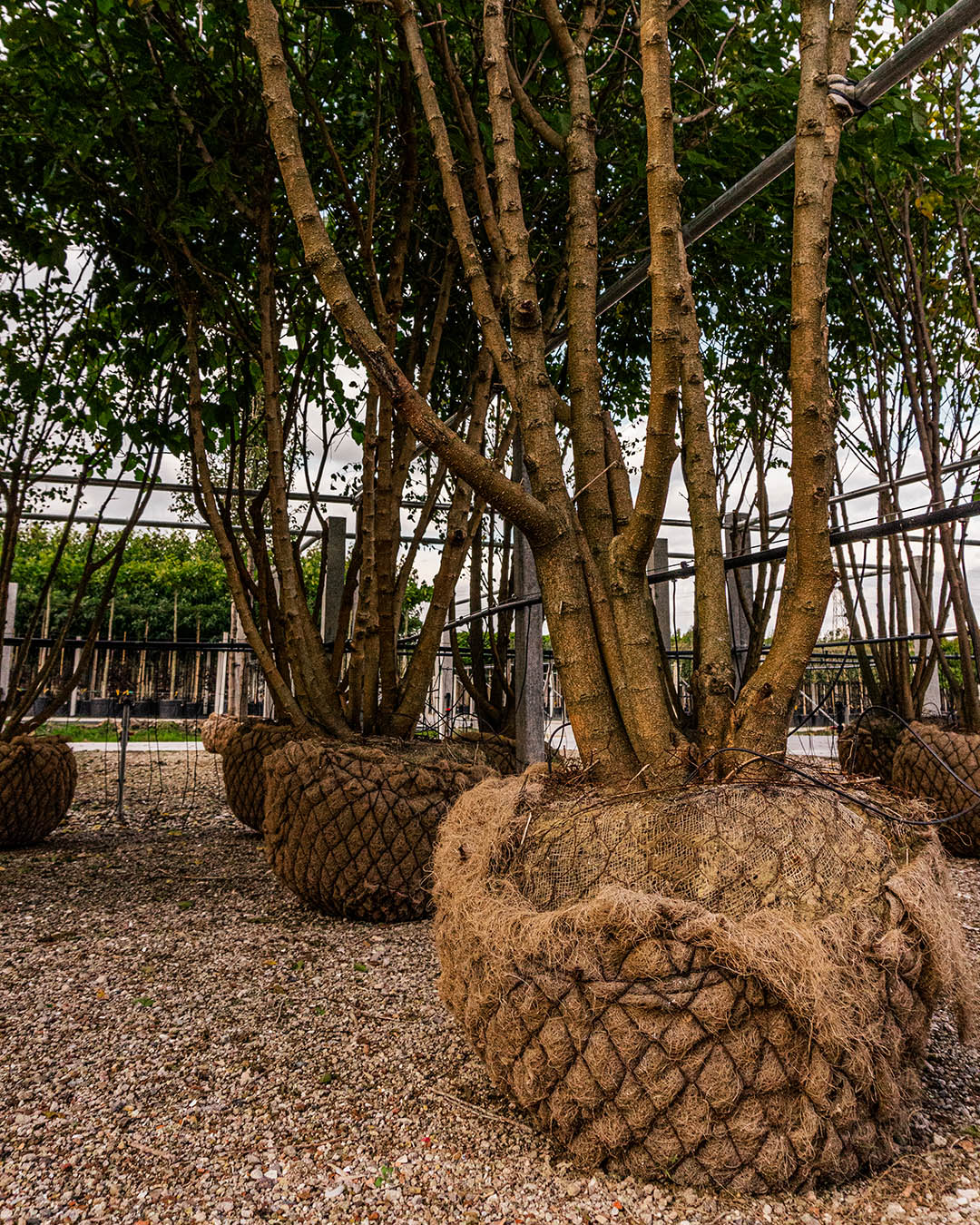
Rootballed plants are also field grown, but lifted with the soil around their roots and wrapped to hold it together, usually in hessian, with larger trees held in a wire basket as well. The rootball protects the roots during handling and suits larger trees and specimen shrubs, while still costing less to move than a container plant of similar size.
Both field-grown forms are only available in the dormant season, which runs from late autumn into spring. Container-grown plants are raised in pots and can be supplied and planted at any time of year, which makes them the practical choice when a planting programme falls outside the winter months. A schedule that names a bare-root or rootballed tree for a summer handover cannot be supplied as written, and the form needs to change or the planting date needs to move.
| Bare root | Rootball | Container grown | |
|---|---|---|---|
| How it is grown | In the field | In the field | In a pot |
| How it arrives | Lifted, with the soil removed from the roots | Lifted with soil around the roots, wrapped in hessian, larger trees also in a wire basket | In its pot |
| When it can be planted | Dormant season only | Dormant season only | All year round |
| Weight and transport | Lightest, lowest transport cost | Lighter than container grown | Heaviest |
| Cost | Most economical | More economical than container grown | Highest |
| Typical use | Whips, native hedging, large plantings | Larger trees and specimen shrubs | Any time of year, including summer handovers |

Writing a schedule that can be supplied
Use the full botanical name, including the cultivar where one matters, since a genus alone leaves the choice open and a common name can mean different plants to different people. For shrubs and perennials, give both the pot size and the height. For trees, state the girth, the form, the root form and, for standards, the clear stem height, so the tree arrives ready for the position it is going into.
It also helps to check the planting date against the root form, to allow some flexibility where a size band or a cultivar is hard to source, and to refer to the industry frameworks that suppliers already work to. Many landscape specifications ask for nursery stock to conform to BS 3936-1 and to be supplied in line with the HTA’s National Plant Specification, both of which give a shared language for sizes and quality.
The Greenwood Specification brings these measurements together for more than 400 plants, with the sizes and heights Greenwood supplies and the plants in the G Range marked for quick availability. We wrote it so that the figures on a schedule and the plants that arrive on site match each other, and a schedule written with those figures in mind is the simplest way to keep a planting scheme on budget and on programme.
For more information about how plants are specified and graded, speak to the G Team today.